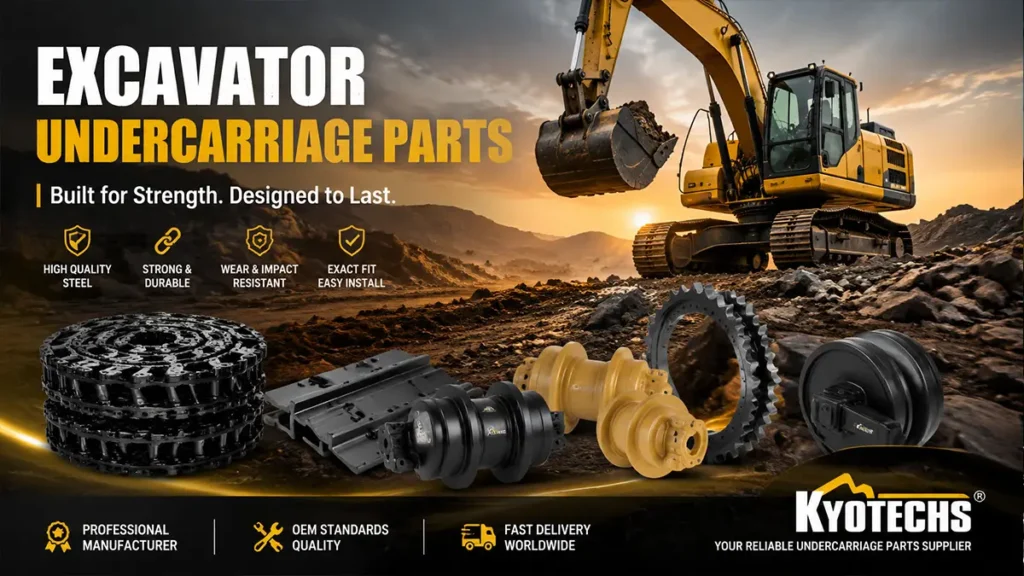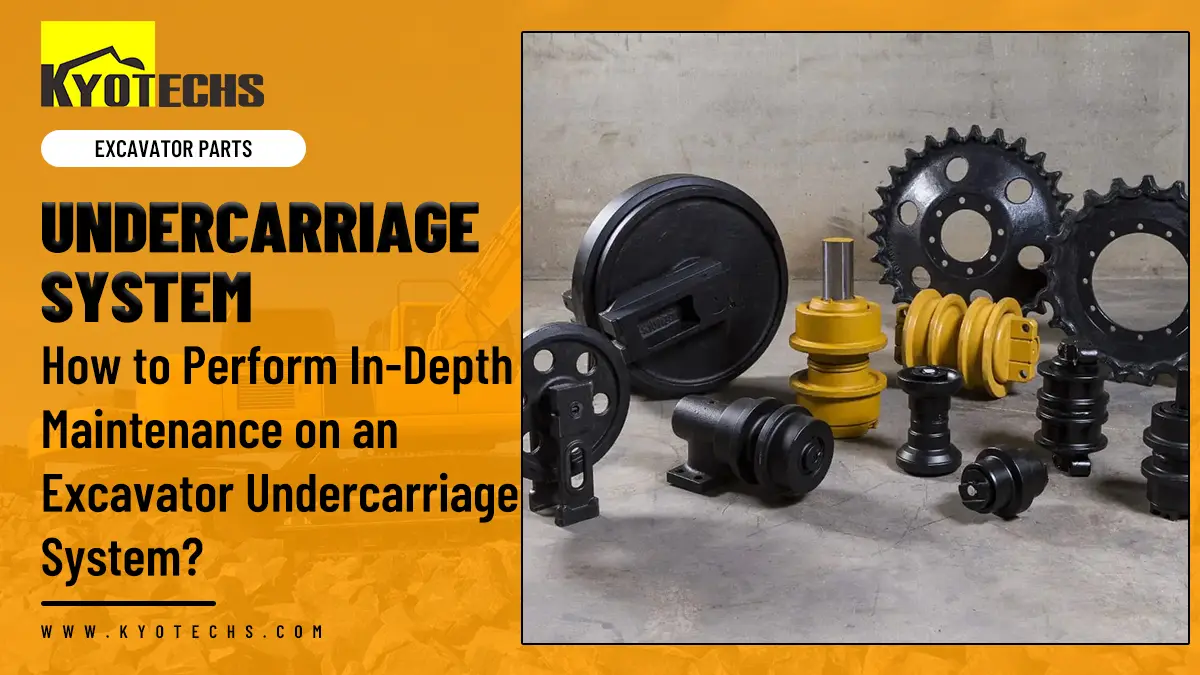
The excavator undercarriage system serves as the foundational support structure of heavy-duty excavators, undertaking the crucial tasks of bearing the machine’s full weight, facilitating movement across rugged terrains, and resisting intense friction, impact, and abrasive wear during construction, mining, landscaping, and other operations.Unlike basic daily cleaning, in-depth undercarriage maintenance involves systematic inspections, precise wear measurement, targeted component care, and proactive repair or replacement of worn parts.
Components of an Excavator Undercarriage System
Before initiating any maintenance, it is vital to grasp the role of each core undercarriage component, as all parts work in tandem to support the machine and combat wear. Familiarity with these components enables you to identify abnormal wear patterns and target maintenance efforts efficiently. Below are the key components and their primary functions:
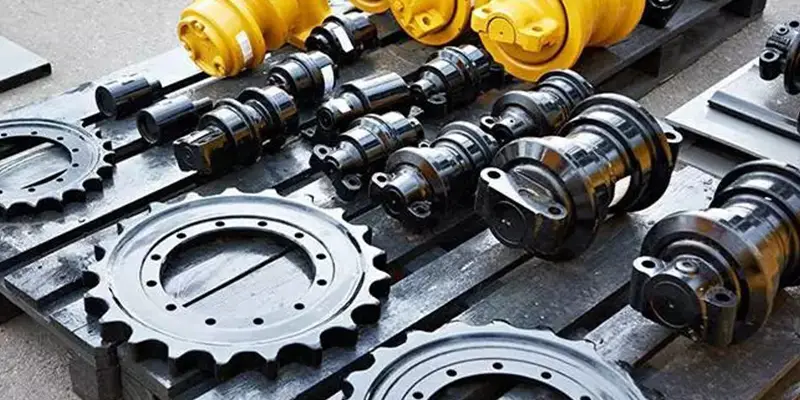
- Track Chain & Track Shoes: As the outermost moving parts of the undercarriage, track chains (also known as track links) connect track shoes to form a continuous loop that provides traction.
- Sprocket (Drive Sprocket): Installed at the rear of the undercarriage and connected to the excavator’s travel motor, the sprocket drives the track chain via its teeth.
- Idler (Front Idler): Positioned at the front of the undercarriage, the idler guides the track chain and maintains proper track alignment. It also collaborates with the tension adjuster to regulate track tightness; a damaged or misaligned idler leads to track derailment and accelerated chain wear.
- Track Rollers (Bottom Rollers): These heavy-duty rollers bear 90% of the excavator’s weight, distributing the load evenly across the track chain.
- Carrier Rollers (Top Rollers): Mounted on the top of the track frame, carrier rollers support the upper section of the track chain, preventing sag and reducing friction during movement.
- Track Tension Adjuster: A hydraulic or grease-filled cylinder system that controls track tension. This component ensures the track chain is neither too tight (causing excessive friction and component strain) nor too loose (resulting in derailment and chain slap). It includes a grease valve and recoil spring for shock absorption.
- Track Frame & Protective Guards: The rigid metal frame that secures all undercarriage components in place, paired with guards that shield rollers, sprockets, and hydraulic lines from rocks, mud, and impact damage.
Methods for Inspecting Chassis System Wear
In-depth maintenance begins with a thorough wear inspection—routine visual checks are insufficient to identify hidden damage or measure critical wear thresholds.
1. Visual Preliminary Inspection
Start with a quick visual walkaround to spot obvious damage and safety hazards: check for loose track bolts, broken track shoes, cracked grousers, bent chain links, oil leaks from rollers/idlers, and debris buildup between components. Look for uneven track wear, misaligned chains, or signs of track derailment. Note any unusual noises (grinding, clanging) during test travel, as these indicate worn bearings or misaligned parts.
2. Precision Wear Measurement (Scheduled Deep Inspection)
For in-depth maintenance, use precision tools to measure wear against Original Equipment Manufacturer (OEM) specifications—this is the only reliable way to determine if parts need repair or replacement. Required tools include a caliper, depth gauge, tape measure, and track chain wear gauge. Key measurements include:
- Track Chain Wear: Measure rail height (the top surface of the track link where rollers run) and pin/bushing wear. If rail height wears beyond 75–80% of the original OEM specification, the chain is near the end of its lifespan. Check for chain elongation; excess stretch signals worn pins and bushings.
- Sprocket Wear: Inspect tooth shape—sharp, pointed teeth (versus the original rounded teeth) indicate severe wear. Measure tooth thickness and depth; worn teeth fail to engage the chain properly and must be replaced.
- Roller & Idler Wear: Use a caliper to measure the diameter of rollers and idlers. A 10% or greater reduction in diameter from OEM specs signifies excessive wear. Check for flat spots, cracks, or seal damage (oil leakage indicates a failed seal, leading to bearing failure).
- Track Tension Check: Measure track sag between the carrier roller and idler and compare to OEM specs. Too much sag means a loose track; too little indicates an over-tightened track.
3. Functional & Leak Inspection
Lift each track off the ground using the excavator’s boom and rotate the track by hand to check for binding, rough rotation, or excessive play. Inspect all hydraulic and grease fittings for leaks, as lost lubrication causes immediate friction and wear. Additionally, check the track frame for cracks, bends, or damaged guards that may misalign components.
Chassis System Maintenance Techniques
Once inspections are complete, execute targeted maintenance techniques to repair wear, prevent future damage, and restore the undercarriage to peak performance. These steps follow industry best practices from leading excavator manufacturers such as Caterpillar, Kobelco, and Bobcat.
1. Thorough Debris Cleaning
Mud, clay, rocks, and concrete buildup are the primary causes of accelerated undercarriage wear—they act as abrasives, jam moving parts, and add excess weight to the machine. Use a high-pressure washer (2000–3000 PSI) to clean all components, focusing on the track chain, sprockets, rollers, idlers, and frame crevices.
2. Proper Lubrication (Critical for Friction Prevention)
Lubrication is the most impactful maintenance task for extending undercarriage life. Use only OEM-recommended heavy-duty grease (waterproof, extreme-pressure formula) and follow a strict lubrication schedule:
- Lubricate track chain pins and bushings every 50 machine hours (or daily for muddy/wet conditions)
- Lubricate idler bearings, roller bearings, and tension adjuster every 250 machine hours
- Grease track tension cylinder fittings to maintain smooth adjustment and prevent corrosion
Avoid over-greasing, as excess grease attracts dirt and debris. Apply grease until a small amount seeps out of the seal, indicating full lubrication.
3. Precise Track Tension Adjustment
Incorrect track tension is the leading cause of premature undercarriage wear. Adjust tension using the grease cylinder system per OEM specs:
- Park the excavator on level ground and lift the track off the ground with the boom
- Add grease to the tension adjuster valve to tighten the track, or release grease to loosen it
- Measure track sag to match OEM specifications; adjust slightly looser for muddy/soft terrain and slightly tighter for firm/rocky terrain
- Over-tightened tracks increase strain on sprockets, rollers, and idlers, cutting component life by 30–40%; loose tracks cause derailment and chain slap damage.
4. Worn Component Repair & Replacement
Replace severely worn parts before they damage other healthy components—this is a cost-effective proactive measure. Follow these guidelines:
- Track chains: Replace if elongation exceeds 3% or rail wear exceeds OEM limits; rotate pins/bushings if wear is minimal to extend life
- Sprockets: Replace if teeth are worn to a sharp point or damaged; replace in pairs with track chains for even wear
- Rollers/Idlers: Replace if bearings are seized, seals are failed, or diameter is worn beyond 10% of OEM specs
- Track shoes: Replace if grousers are worn flat, shoes are cracked, or bolts are broken; tighten loose shoe bolts during every inspection
5. Corrosion Protection & Frame Repair
For excavators operating in coastal, wet, or high-moisture environments, apply a rust-inhibitive coating to the track frame and guards after cleaning and drying. Repair small frame cracks with professional welding; replace severely bent frames to maintain component alignment.
Conclusion
In-depth maintenance of an excavator undercarriage system is not merely a repair task—it is a strategic investment in your equipment’s longevity and operational efficiency.
If you have any questions or would like to learn more about our products, please feel free to contact us.
FAQs
Q1: How often should I perform in-depth undercarriage maintenance?
For light-duty use (landscaping, farm work), perform in-depth maintenance every 1000 machine hours. For medium-duty construction use, every 500 hours; for heavy-duty mining/rocky terrain use, every 250 hours. Always conduct a quick visual inspection before every shift.
Q2: Can I reuse worn track chain pins and bushings?
Yes—if wear is minimal (less than 3% elongation), you can rotate or flip pins and bushings to extend chain life. However, if wear exceeds OEM limits or there is visible cracking, replacement is mandatory to avoid chain breakage during operation.
Q3: What type of grease should I use for undercarriage lubrication?
Use an extreme-pressure (EP), waterproof, high-temperature grease recommended by your excavator’s OEM. Avoid standard automotive grease, as it breaks down quickly in heavy-duty, wet, or abrasive conditions and fails to protect bearings and pins.
Q4: Why is my excavator track derailing frequently?
Common causes include loose track tension, worn idlers, misaligned track frame, damaged sprocket teeth, or worn track chain links. Inspect and adjust tension first, then check idler alignment and component wear to resolve the issue.
Q5: Is it worth repairing minor roller wear, or should I replace rollers entirely?
If the roller’s bearing is healthy, the seal is intact, and wear is less than 10% of the original diameter, minor surface wear can be left as-is. If the seal is leaking or the bearing is rough, replace the roller immediately—failed bearings will rapidly damage the track chain and sprockets.