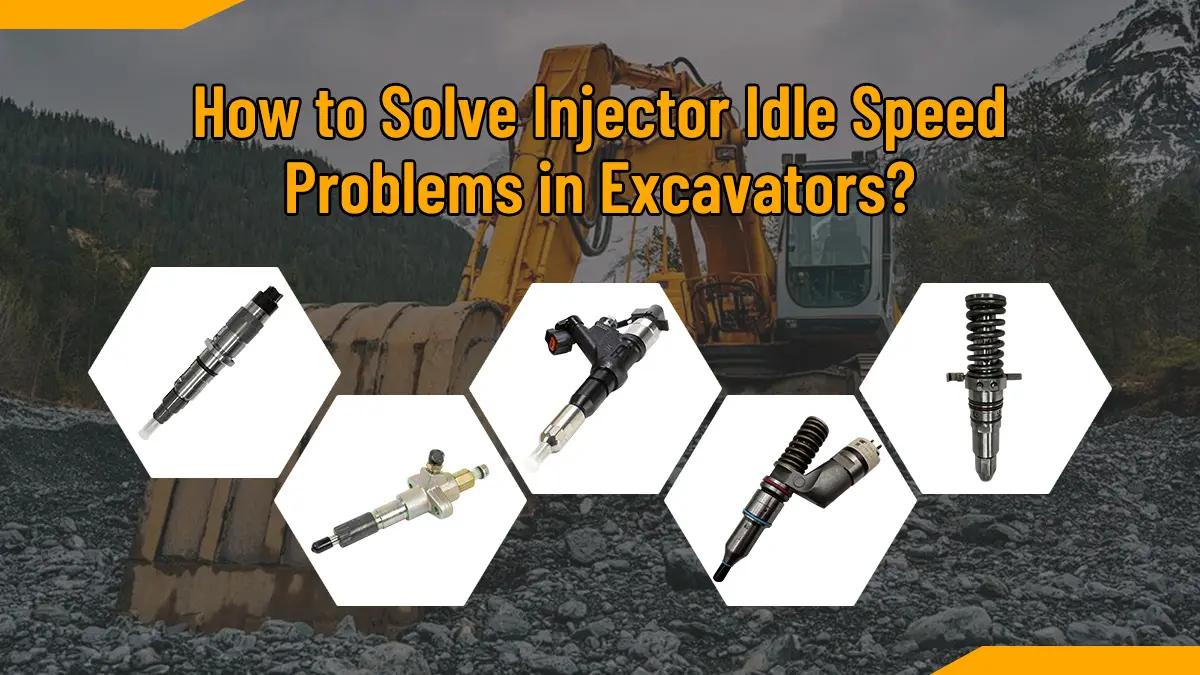
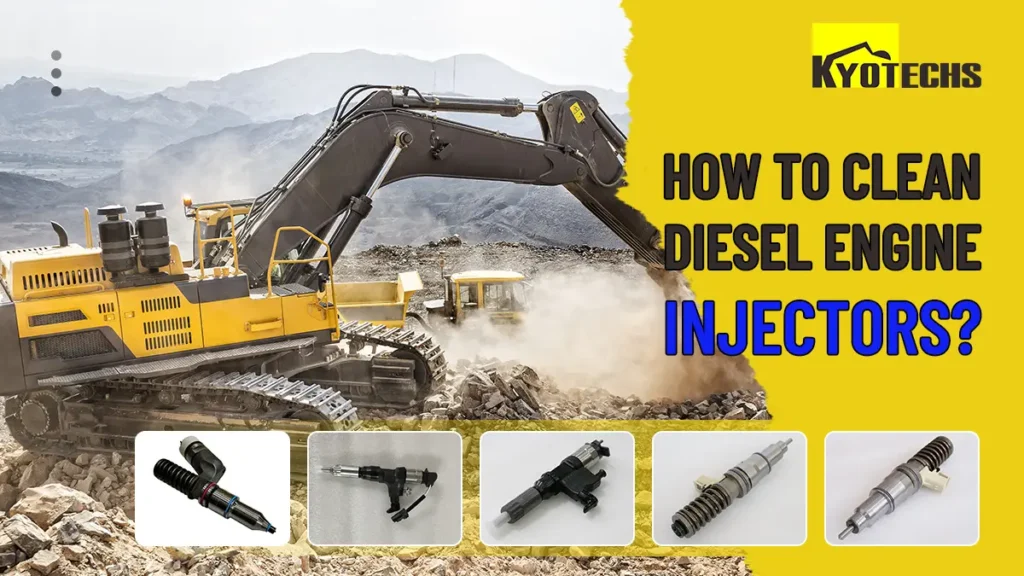
Excavators are the backbone of construction, mining, and earthmoving engineering, and their stable operation directly determines work efficiency and project progress. As a core component of the excavator engine’s fuel supply system, the fuel injector plays a crucial role in controlling fuel injection quantity, injection timing, and atomization effect. When the fuel injector experiences idling problems, such as unstable idling, stalling, excessively high idle speed, or RPM fluctuations, it not only affects the normal operation of the excavator but also accelerates engine wear and increases fuel consumption.
Unstable Idle Speed, Prone to Stalling
Unstable idling and frequent stalling are the most common injector-related idling problems in excavators. This phenomenon typically manifests as: significant fluctuations in engine speed at idle (usually deviating from the standard idle range of 650-850 rpm for most excavators), accompanied by noticeable engine vibration, and even sudden stalling when the excavator is stationary or under light load.
The root cause of this problem is mostly related to unstable fuel injection and uneven fuel injection. Common causes include clogged injectors, worn injection valves, unstable fuel pressure, or incorrect injection timing. In addition, malfunctions in the engine intake system, electronic control unit (ECU), or sensors can also indirectly lead to unstable idling and stalling, as they affect the coordination between fuel injection and air intake.
Troubleshooting
When facing injector idle speed problems in excavators, it is recommended to follow the “from simple to complex” principle for troubleshooting, which can save time and avoid unnecessary parts replacement. The core steps are as follows:
- Check Fuel Quality and Supply: First, confirm that the diesel used meets the excavator’s specifications (avoid low-quality or contaminated diesel). Check if the fuel tank has sufficient fuel, and inspect the fuel filter for clogging—clogged filters will reduce fuel supply pressure, leading to unstable injector work.
- Inspect Injector Appearance and Connections: Visually check the injector for oil leaks, loose connections, or damage to the wiring harness (for electronic injectors). Oil leaks will cause insufficient fuel pressure, while loose wiring may lead to incorrect injector control signals.
- Test Injector Performance: Use professional equipment (such as an injector tester) to check the injector’s injection pressure, atomization effect, and injection quantity. If the injector’s atomization is poor (fuel droplets are uneven), the injection pressure is too low or too high, or the injection quantity is inconsistent, it needs to be cleaned, calibrated, or replaced.
- Check Related Sensors and ECU: Use a diagnostic scanner to read the excavator’s ECU fault codes, focusing on sensors related to fuel injection and idle control, such as the crankshaft position sensor, camshaft position sensor, and idle control valve. A faulty sensor will send incorrect signals to the ECU, leading to improper injector operation.
- Inspect Air Intake System: Check if the air filter is clogged or if there is air leakage in the intake pipeline. Insufficient air intake will cause the air-fuel mixture to be too rich, affecting idle stability. Clean or replace the air filter and repair any leaking intake hoses.
Unstable Idle Speed When Cold, Prone to Stalling
Diagnosis and Troubleshooting
This problem is mainly reflected in: when the excavator is started in a cold environment (usually below 10°C), the idle speed is unstable, the engine jitters severely, and it is easy to stall within a few minutes of starting, but the idle speed gradually stabilizes after the engine warms up. This is closely related to the injector’s poor adaptability to low-temperature environments and insufficient fuel atomization.
Diagnosis Points:
- Check if the cold-start injector (if equipped) is working normally—failure to inject fuel during cold start will lead to insufficient fuel supply and unstable idle.
- Test the injector’s atomization effect at low temperatures: low temperature will increase diesel viscosity, and if the injector nozzle is slightly clogged, it will further worsen atomization, leading to incomplete combustion and stalling.
- Inspect the glow plug system (for diesel engines): if the glow plug fails, the engine cannot reach the required temperature for stable combustion during cold start, indirectly affecting the injector’s performance.
Troubleshooting Methods:
Clean the injector nozzles with a professional cleaning agent to remove carbon deposits and impurities that affect atomization at low temperatures. For severely clogged injectors, replace them with new ones.
Check the cold-start injector’s power supply and wiring, and replace the cold-start injector if it is faulty.
Inspect the glow plug system: replace damaged glow plugs and check the glow plug relay to ensure normal preheating during cold start.
Use diesel with appropriate viscosity (choose according to the ambient temperature) to avoid poor fluidity at low temperatures affecting fuel supply to the injector.
Unstable Idle Speed or Stalling When Warm
Unlike cold-start problems, this issue occurs when the engine reaches normal operating temperature (80-90°C): the idle speed becomes unstable, jitters, or even stalls, which is often caused by thermal expansion of injector components or deterioration of fuel quality at high temperatures.
Common causes include: worn injector valve seats (thermal expansion leads to poor sealing, resulting in fuel leakage), clogged injector nozzles (carbon deposits accumulate due to high-temperature combustion), unstable fuel pressure (high temperature affects the fuel pump’s performance), or faulty idle control valve (thermal deformation leads to incorrect idle adjustment). In addition, hydraulic system issues such as excessive pump pressure can also cause the engine to stall when warm, as the engine load increases beyond its capacity.
Troubleshooting Methods:
- Use an injector tester to check the injector’s sealing performance and injection quantity at high temperatures. If the valve seat is worn or the injector leaks, replace the injector assembly.
- Clean the injector nozzles and intake manifold to remove carbon deposits caused by high-temperature combustion, ensuring smooth fuel injection and air intake.
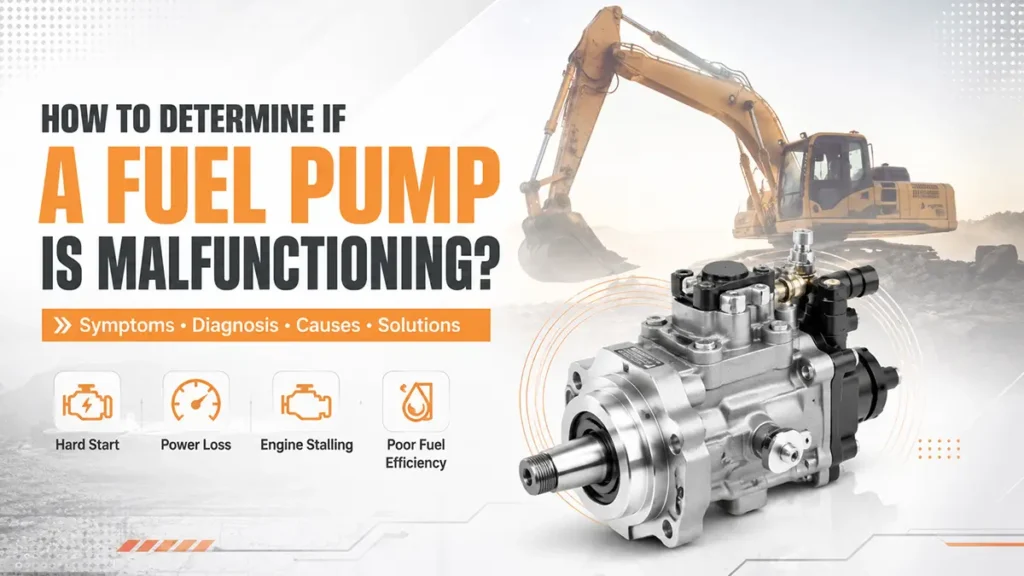
- Check the fuel pump’s working status: measure the fuel pressure, and if it is unstable, repair or replace the fuel pump to ensure stable fuel supply to the injector.
- Inspect the idle control valve: clean the valve body to remove carbon deposits, and test its working status. Replace the idle control valve if it is thermally deformed or faulty.
- Check the hydraulic system for excessive pressure, and adjust the hydraulic pump parameters to match the engine power to avoid overload stalling.
Excessively High Idle Speed When the Engine is Warm
Excessively high idle speed when the engine is warm (exceeding 1000 rpm, far higher than the standard idle range) is another common injector-related problem. This not only increases fuel consumption but also accelerates the wear of engine components (such as bearings and gears) and affects the excavator’s operational precision during light-load work.
The main causes are: the injector’s injection quantity is too large (due to incorrect calibration or worn components), the idle control valve is stuck in the open position (cannot adjust the idle speed downward), the throttle lever is not reset properly (mechanical adjustment issues), or the ECU receives incorrect sensor signals (leading to excessive fuel injection). In some cases, overly hard idle springs or excessive preload can also prevent the throttle from closing completely, resulting in high idle speed.
Troubleshooting Methods:
- Calibrate the injector’s injection quantity using professional equipment to ensure it meets the manufacturer’s specifications. If the injector is worn and cannot be calibrated, replace it.
- Inspect the idle control valve: clean the valve core to remove dirt that causes jamming, and test its responsiveness. Replace the idle control valve if it is stuck or faulty.
- Check the throttle lever and return spring: adjust the throttle cable to ensure the lever resets completely, and replace the return spring if it is too soft or deformed. Adjust the idle stop block or adjustment screw to limit the throttle opening to the standard idle range.
- Use a diagnostic scanner to check the sensor signals (such as the throttle position sensor and coolant temperature sensor) and repair or replace faulty sensors to ensure the ECU receives accurate data for fuel injection control.
Idle Speed Fluctuating Up and Down
Idle speed fluctuating up and down (also known as “engine hunting”) is a typical symptom of unstable injector work, manifested as the engine speed rising and falling repeatedly (e.g., 600-900 rpm) when idling, accompanied by obvious engine jitter and abnormal noise. This problem is often caused by inconsistent fuel injection quantity of multiple injectors, unstable fuel pressure, or faulty idle control system.
Common causes include: uneven carbon deposits on injector nozzles (leading to inconsistent injection quantity), worn injector plungers (affecting fuel supply stability), loose fuel pipeline connections (causing air intake and unstable fuel pressure), or faulty(governor) components (such as loose connecting pins or inflexible fuel control rods).
Troubleshooting Methods:
Inspect and clean all injectors uniformly, and test their injection quantity and atomization effect. Replace injectors with inconsistent performance to ensure uniform fuel supply.
Check the fuel pipeline for air intake: tighten loose connections, replace damaged hoses, and bleed the fuel system to remove air bubbles that affect fuel pressure stability.
Inspect the governor: check for loose connecting pins, inflexible fuel control rods, or improper adjustment of the speed-stabilizing spring. Adjust or repair the governor to ensure it can stably control the idle speed.
Calibrate the ECU’s idle control parameters to ensure it can timely adjust the injector’s fuel injection quantity according to the engine speed, stabilizing the idle speed.
Conclusion
Excavator injector idling problems are mostly caused by injector blockage, wear, improper calibration, or malfunctions in related systems (such as fuel supply, intake, or electronic control systems). To effectively resolve these issues, it’s crucial to first accurately diagnose the cause based on the symptoms (cold or hot engine, excessively high idle speed, or fluctuating idle speed). Then, follow a troubleshooting principle of “from simple to complex”—first check the fuel quality and filter, then check the injectors themselves, and finally check related sensors and electronic components.
Regular maintenance is key to preventing injector idling problems: replace fuel and air filters on time, use high-quality diesel fuel, clean the injectors regularly, and check their operating condition during routine maintenance.
If you have any technical questions or would like to learn more about our products, please feel free to contact us.
FAQs
Q1: Why does the excavator’s idle speed become unstable and stall only when cold?
A1: The main reason is poor fuel atomization of the injector at low temperatures. Low temperature increases diesel viscosity, and if the injector nozzle is slightly clogged, it will further worsen atomization, leading to incomplete combustion. In addition, faulty cold-start injectors or glow plugs can also cause insufficient fuel supply or poor combustion during cold start, resulting in unstable idle speed and stalling. Cleaning the injectors and checking the cold-start system can usually solve the problem.
Q2: Can I clean the injectors myself to solve idle speed problems?
A2: For mild clogging, you can use a professional injector cleaning agent (added to the fuel tank) for simple cleaning.
Q3: What should I do if the excavator’s idle speed is excessively high when warm?
A3: First, check the idle control valve for jamming or faults, clean or replace it if necessary. Then, calibrate the injector’s injection quantity to ensure it meets the standard. In addition, check the throttle lever and return spring to ensure the throttle resets completely, and adjust the idle stop block to limit the idle speed to the normal range. If the problem persists, use a diagnostic scanner to check the sensor signals and ECU parameters.
Q4: How often should I maintain the excavator’s injectors to prevent idle speed problems?
A4: It is recommended to clean the injectors every 2000-3000 working hours, and replace the injectors every 10000-15000 working hours (depending on the excavator’s model and working environment). In addition, replace the fuel filter every 500-1000 working hours, use high-quality diesel, and drain water from the fuel system regularly to reduce injector clogging and wear.
Q5: Is unstable idle speed definitely caused by injector problems?
A5: Not necessarily. While injectors are a common cause, unstable idle speed can also be caused by other issues, such as clogged air filters, air leakage in the intake pipeline, faulty sensors (crankshaft position sensor, camshaft position sensor), unstable fuel pressure, or hydraulic system overload. It is recommended to conduct a comprehensive inspection according to the troubleshooting steps to avoid misjudgment and unnecessary part replacement.