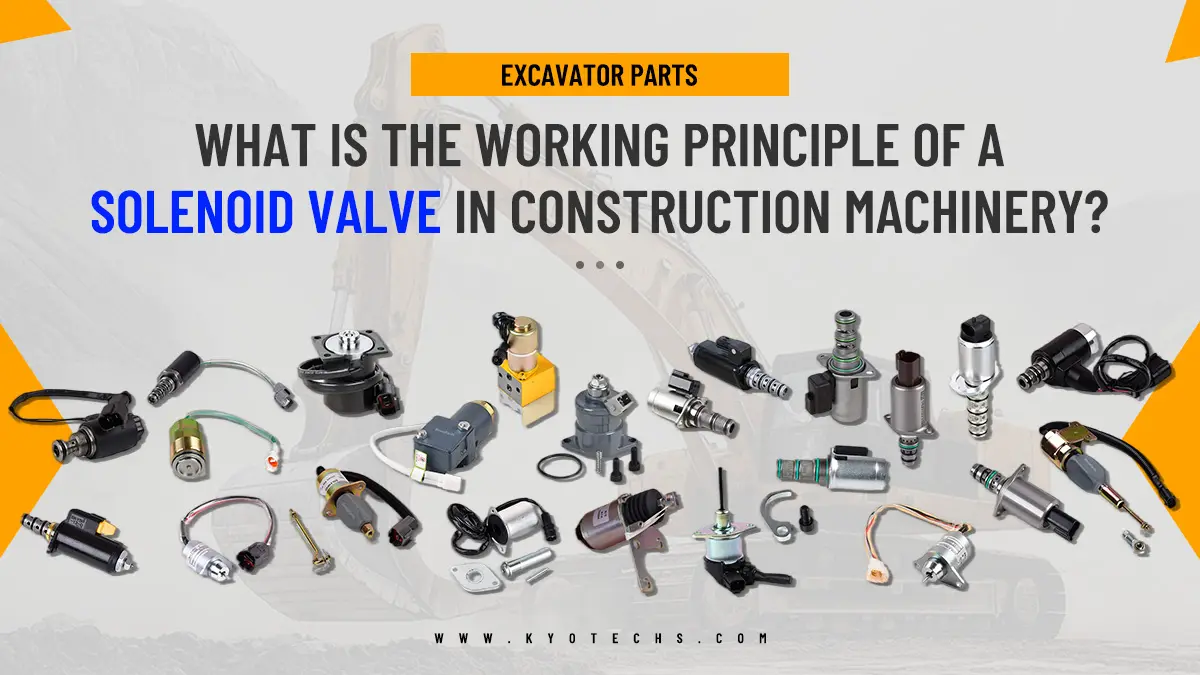
Solenoid valves are the core control components of the hydraulic and pneumatic systems in modern construction machinery. Widely equipped on excavators, loaders, cranes, and road rollers, these electromagnetic control valves precisely regulate the flow, pressure, and direction of hydraulic oil and compressed air. They convert electrical control signals into mechanical motion, realizing automatic switching, positioning, and action adjustment of construction equipment.
AC and DC Electromagnets for Solenoid Valves in Construction Machinery
The power source and driving core of construction machinery solenoid valves are electromagnets, which are mainly divided into AC electromagnets and DC electromagnets. The two types have distinct structural characteristics and application scenarios, matching the complex working conditions of engineering equipment such as variable voltage, vibration, and long-term continuous operation.
AC Electromagnets
AC electromagnets are powered by alternating current, featuring a simple structure, fast response speed, and strong instantaneous suction.
DC Electromagnets
DC electromagnets adopt direct current power supply, which is the mainstream configuration for heavy-duty construction machinery solenoid valves. They provide stable and constant magnetic force without electromagnetic fluctuation and working noise.
Structure of Solenoid Valves for Construction Machinery
Construction machinery solenoid valves adopt an integrated compact structure, composed of two core parts:electromagnetic drive assembly and fluid control valve body assembly. Each component coordinates to complete the conversion of electrical signals to fluid control, and the overall structure is durable and easy to maintain, adapting to rugged engineering working conditions.
The main structural components and functions are as follows:
- Electromagnetic coil: The power generation component of the magnetic field. After energization, it forms a stable magnetic field to drive the movement of the iron core; after power-off, the magnetic field disappears instantly to reset the valve body.
- Movable iron core and fixed iron core: The force transmission parts. The movable iron core is attracted by magnetic force to generate linear displacement, directly driving the valve core to switch; the fixed iron core stabilizes the magnetic field and ensures accurate displacement.
- Valve core and valve seat: The core control parts of fluid flow. The opening and closing of the valve core fits with the valve seat to cut off or connect the hydraulic/pneumatic channel, controlling the flow direction and pressure.
- Reset spring: The reset component.
- Valve body and sealing parts: The external protective and sealing structure.
- Pressure relief hole: A unique auxiliary structure for engineering solenoid valves, used to balance the internal and external pressure difference of the valve body and avoid valve core stuck caused by excessive pressure difference.
Classification and Working Principles of Construction Machinery Solenoid Valves
According to different driving modes and structural principles, solenoid valves used in construction machinery are divided into three categories: direct-acting solenoid valves, distributed direct-acting solenoid valves, and pilot-operated solenoid valves.
1. Direct-acting Solenoid Valve
The direct-acting solenoid valve is the most basic and widely used type in small and medium-sized construction machinery. Its core working principle is direct magnetic force drive without intermediate auxiliary mechanism. In the natural power-off state, the reset spring presses the valve core tightly on the valve seat, and the fluid channel is closed to keep the system in a static state.
2. Distributed Direct-acting Solenoid Valve
The distributed direct-acting solenoid valve is an upgraded optimized type of direct-acting valve, specially designed for medium-pressure working conditions of construction machinery. It combines the advantages of direct drive and pressure difference auxiliary drive, solving the problem of insufficient driving force of traditional direct-acting valves under medium pressure.
Its working principle is based on the structural design of pressure relief holes and multi-point force application. In the power-off state, the valve core is closed by the spring and system pressure difference, maintaining a sealed state. After the coil is energized, the electromagnetic force first opens the internal pressure relief hole to balance the pressure difference between the upper and lower cavities of the main valve core. At the same time, the magnetic force pulls the main valve core to displace, and the fluid channel is fully opened under the dual action of electromagnetic force and medium pressure difference.
3. Pilot-operated Solenoid Valve
Pilot-operated solenoid valves are high-pressure heavy-duty valves exclusive to large construction machinery, applicable to high-pressure and large-flow hydraulic systems such as main pump control and arm expansion of large excavators and tower cranes.
Conclusion
Solenoid valves are the “control nerves” of hydraulic and pneumatic systems in engineering machinery. Their core working principle is to convert electrical control signals into mechanical displacement through electromagnetic action, thereby achieving fluid channel switching and system action control. AC and DC solenoids can provide stable power drive for different operating conditions, while the three main structural types cover the full pressure and flow range of engineering equipment.
Direct-acting valves are suitable for low-pressure, low-flow auxiliary control; distributed direct-acting valves are suitable for medium-pressure, conventional operating conditions; and pilot-operated valves are used for high-pressure, high-flow main system control.
If you have any technical questions or would like to learn more about our products, please feel free to contact us.
FAQs
Q1. What is the main difference between AC and DC solenoid valves in construction machinery?
A: AC solenoid valves have fast response speed but are prone to heating and noise, suitable for intermittent light-load working conditions. DC solenoid valves feature stable magnetic force, low noise, low failure rate and strong environmental adaptability, which are widely used in heavy-duty and continuous operation construction machinery systems.
Q2. Which solenoid valve is most commonly used for large excavator main hydraulic systems?
A: Pilot-operated solenoid valves are the standard configuration for large excavator main hydraulic systems. They rely on pressure difference auxiliary drive to realize high-pressure and large-flow fluid control, with stable performance and low energy consumption, meeting the high-load operation demands of engineering equipment.
Q3. Can distributed direct-acting solenoid valves work under zero pressure?
A: No. Distributed direct-acting solenoid valves rely on the pressure difference of the fluid medium to assist opening. They need a certain working pressure (0-0.6MPa) to operate stably, and cannot work normally under zero-pressure or vacuum environments, which is different from traditional direct-acting solenoid valves.
Q4. What are the common faults of construction machinery solenoid valves?
A: Common faults include valve core jamming caused by oil dirt accumulation, coil burnout caused by overheating, poor sealing leading to hydraulic oil leakage, and slow valve reset caused by spring fatigue. Most faults are related to working environment pollution and long-term high-load operation.