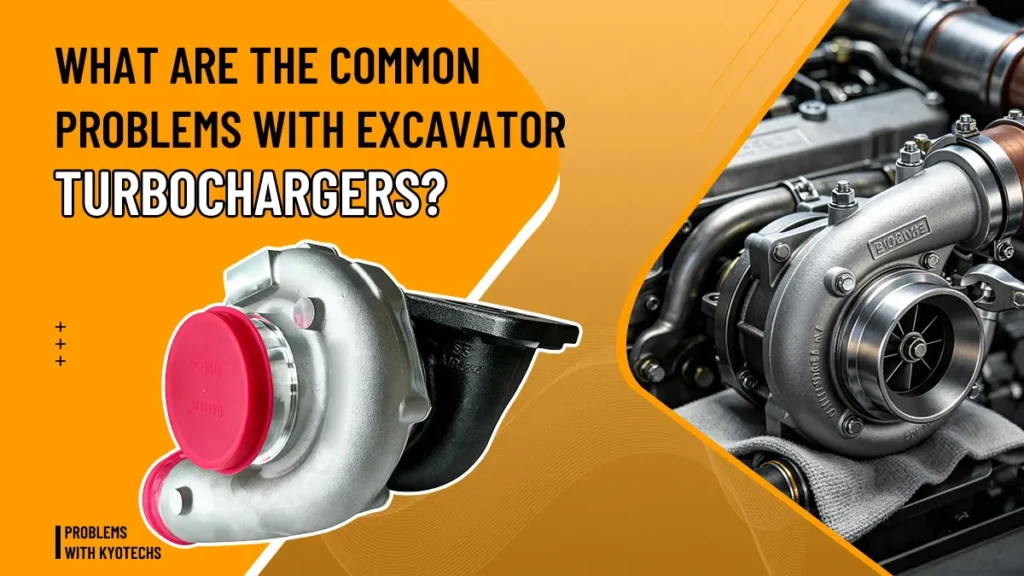
If you own, operate, or maintain heavy construction machinery, you’ve likely heard the term “turbocharger” many times. As the core forced intake component of an excavator’s diesel engine, the turbocharger directly determines the machine’s power output, fuel efficiency, and long-term operational stability. Many excavator performance problems, such as insufficient digging force, excessive fuel consumption, and engine smoke, stem from an aging or improperly maintained turbocharger.
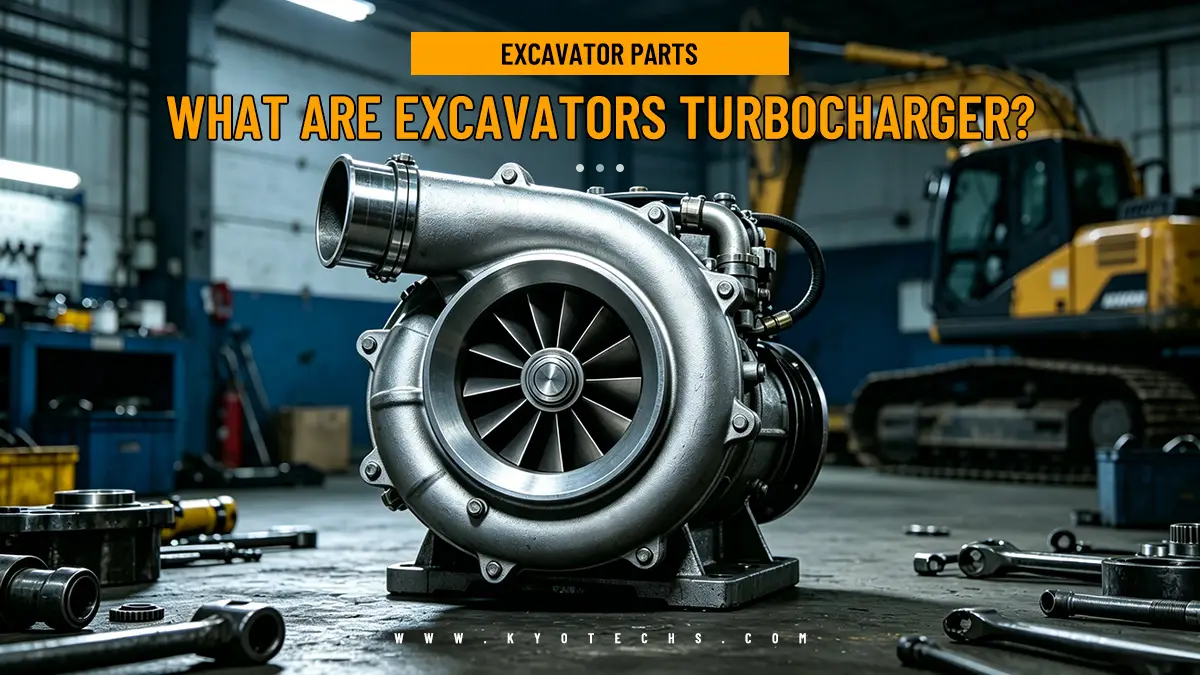
What Is an Excavator Turbocharger?
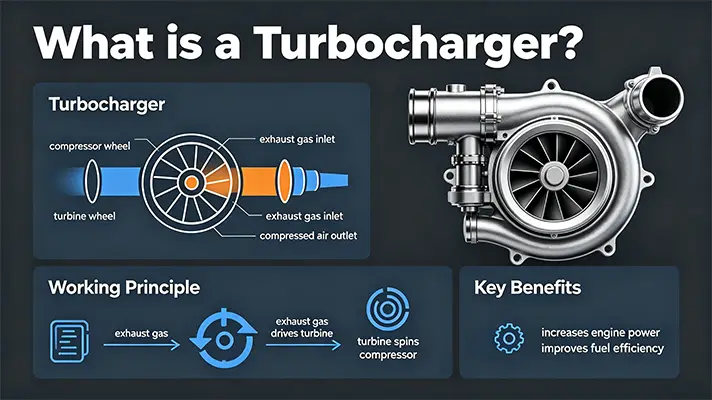
An excavator turbocharger is a precision mechanical component designed specifically for heavy-duty diesel engines of excavators. It can withstand extreme working conditions, including long-term high-load operation, high temperature, dusty environment and various construction environment.
Its core definition is a forced induction system that recycles waste exhaust energy from the engine to compress ambient air and deliver more oxygen into the combustion chamber. In short, it means burning fuel more completely without increasing engine displacement, thereby increasing power, improving torque, and reducing fuel waste.
How Does an Excavator Turbocharger Work?
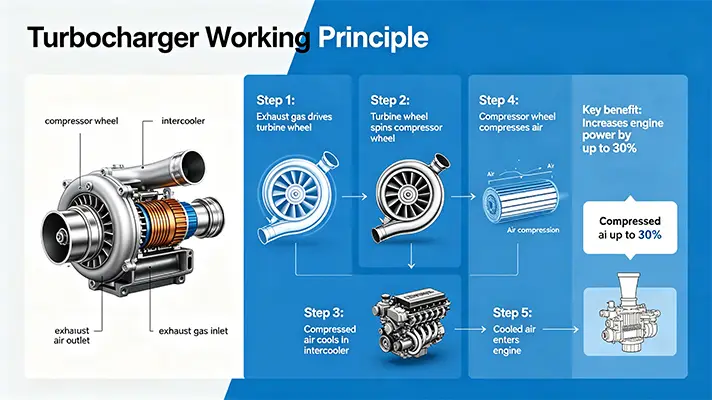
The working principle of an excavator turbocharger relies entirely on engine exhaust energy, requiring no additional mechanical power drive, which is why it is more energy-efficient than superchargers. Its operation can be divided into three core steps, involving two key components: the turbine wheel and the compressor wheel, fixed on the same rotating shaft inside the turbocharger shell.
Step 1: Exhaust-driven turbine rotation
When the excavator engine is running, high-temperature and high-pressure exhaust gas generated by diesel combustion is discharged from the engine cylinder. The turbocharger’s turbine chamber captures this waste exhaust gas, which impacts and pushes the turbine wheel to rotate at an ultra-high speed. This process converts the thermal energy of waste exhaust into mechanical rotational energy.
Step 2: Air compression by the compressor
Since the turbine wheel and compressor wheel share one shaft, the high-speed rotation of the turbine drives the compressor wheel on the air intake side to rotate synchronously. The compressor wheel rapidly sucks in ambient air and compresses it to increase air density and oxygen content per unit volume.
Step 3: Efficient combustion and power boost
The compressed high-density air is cooled by the intercooler and then delivered to the engine cylinder. More oxygen enables the diesel fuel to burn more sufficiently and rapidly, generating greater explosive force.
Use and Maintenance of Excavator Turbochargers
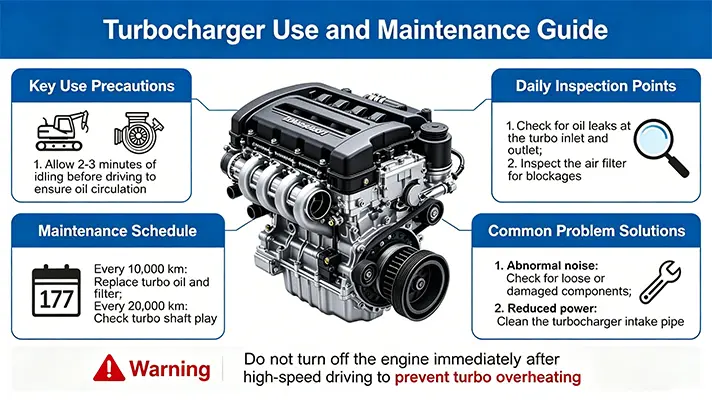
As a high-precision, high-speed moving part, the excavator turbocharger has a strict service life and high environmental requirements. Most turbocharger failures are not caused by quality problems but by irregular daily use and neglected maintenance.
Key Usage Specifications
First, avoid long-term idling and sudden full-load operation. Many operators habitually let the excavator idle for a long time before construction or shut down the engine immediately after heavy-load work. Long-term idling will cause insufficient turbocharger lubrication and carbon deposition; sudden full-load operation without warm-up will lead to sharp temperature and pressure changes, causing accelerated wear of internal parts.
Second, adapt to working load reasonably. Long-term overload will make the turbocharger run beyond the rated speed, resulting in excessive temperature, oil seal aging, and air leakage.
Third, use qualified supporting materials. The turbocharger’s lubrication and heat dissipation depend on engine oil and coolant. Unqualified low-grade engine oil will cause poor lubrication of high-speed rotating bearings, leading to bearing wear and turbo jamming; inferior coolant will cause insufficient heat dissipation, resulting in high-temperature burnout of internal components.
Common Damages Caused by Poor Use and Maintenance
Neglected daily maintenance will trigger a series of turbocharger faults, including turbo oil leakage, insufficient boost pressure, engine black smoke, weak digging power, and abnormal turbo noise.
Turbocharger Maintenance Tips for Excavators
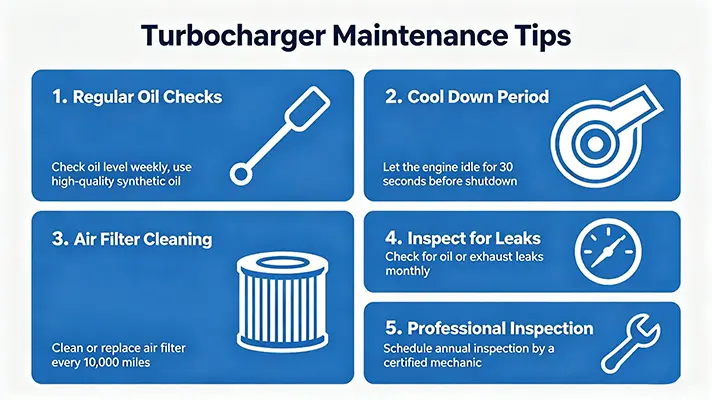
Targeted daily and regular maintenance is the key to keeping the excavator turbocharger in optimal condition. Below are practical, industry-verified maintenance tips suitable for all types of excavator turbochargers, applicable to daily operation and regular inspection.
1. Standardize engine start and stop operations
Always perform a 3–5 minute low-speed warm-up after starting the excavator. This allows the engine oil to fully circulate to the turbocharger bearings to form a lubricating oil film and avoid dry friction wear. After heavy-load operation, do not shut down the engine immediately; keep it idling for 3–5 minutes to reduce the turbocharger’s temperature and speed gradually, preventing high-temperature oil carbonization and oil seal damage.
2. Replace engine oil and oil filter regularly
The turbocharger’s high-speed rotating bearings rely entirely on clean engine oil for lubrication and heat dissipation. It is necessary to replace the engine oil and special oil filter strictly according to the excavator’s maintenance cycle.
3. Inspect and replace the air filter frequently
Excavators work in dusty construction sites, and a clogged or damaged air filter will let dust and impurities enter the turbocharger and engine. Hard dust particles will scratch the compressor wheel and turbine wheel, causing reduced boost pressure and abnormal noise.
4. Regularly check turbo air tightness and oil circuit
Check the turbocharger intake and exhaust pipes regularly to ensure no air leakage or loose interfaces, which may cause insufficient boost pressure and power attenuation. At the same time, inspect the oil inlet and return pipes for oil leakage, blockage, or aging.
5. Avoid long-term overload and harsh operation
Control the excavator’s working load reasonably and avoid long-term full-load digging, frequent sudden acceleration, and sharp throttle operation. Stable operation can keep the turbocharger running within the rated parameter range, effectively reducing fatigue wear and high-temperature aging of parts.
6. Regularly clean carbon deposits
After long-term operation, carbon deposits will form on the turbocharger turbine and engine exhaust pipeline, affecting exhaust efficiency and boost effect. Clean internal carbon deposits every 6–12 months according to the working environment to restore the turbocharger’s working efficiency.
Conclusion
The turbocharger is the “power core” of an excavator’s diesel engine. It achieves forced air intake by recovering energy from exhaust gases, helping excavators cope with various harsh working conditions.
While turbochargers are precisely constructed and durable, their performance depends entirely on daily usage habits and maintenance quality. Proper start-stop operation, regular filter and oil changes, checking airtightness and oil lines, and avoiding overload operation can effectively prevent common turbocharger failures.
If you have any technical questions or would like to learn more about our products, please feel free to contact us.
FAQs
Q1: What are the main signs of a faulty excavator turbocharger?
Common faulty signs include weak excavator digging power, slow acceleration, black or blue smoke from the exhaust pipe, increased fuel consumption, abnormal whistling or friction noise from the engine compartment, and oil leakage at the turbo interface. Once these problems occur, the turbocharger should be inspected in time to avoid secondary engine damage.
Q2: Can an excavator work normally with a damaged turbocharger?
It can work temporarily but is not recommended. A damaged turbocharger will cause insufficient engine intake, incomplete fuel combustion, and severely reduced power, making the excavator unable to complete heavy-load operations. Long-term operation will also cause engine carbon deposition, cylinder wear, and other faults, increasing higher maintenance costs.
Q3: What is the difference between an excavator turbocharger and a car turbocharger?
Excavator turbochargers are designed for heavy-duty, high-load, and dusty working environments, with higher high-temperature resistance, wear resistance, and structural stability. They focus on low-speed torque output and continuous stable operation. Car turbochargers pay more attention to instantaneous power response and noise control, and cannot adapt to the harsh working conditions of construction machinery.
Q4: How to prevent turbocharger oil leakage for excavators?
To prevent oil leakage, standardize start-stop operations to avoid high-temperature oil carbonization, replace engine oil and filters on schedule to keep the oil circuit unobstructed, check the air pressure balance of the crankcase regularly, and avoid long-term idling and overload operation. Timely inspection of aging oil seals and pipelines can also effectively prevent oil leakage faults.