Discover how an excavator hydraulic pump works, from its core mechanics to efficient operation, and explore the different types of hydraulic pumps, including gear, vane, and piston varieties. Kyotechs offers expert insights for optimal performance.
Excavators are workhorses in construction, mining, and agriculture, and their power comes largely from hydraulic systems. At the heart of these systems is the hydraulic pump, a critical component that converts mechanical energy into hydraulic energy. Understanding how these pumps work, their types, and maintenance can help operators and fleet managers keep equipment running efficiently.
3 Types of Hydraulic Pumps Used in Excavators
Hydraulic pumps in excavators are categorized based on their displacement characteristics and operational principles. The three primary types are:
1.Gear Pumps
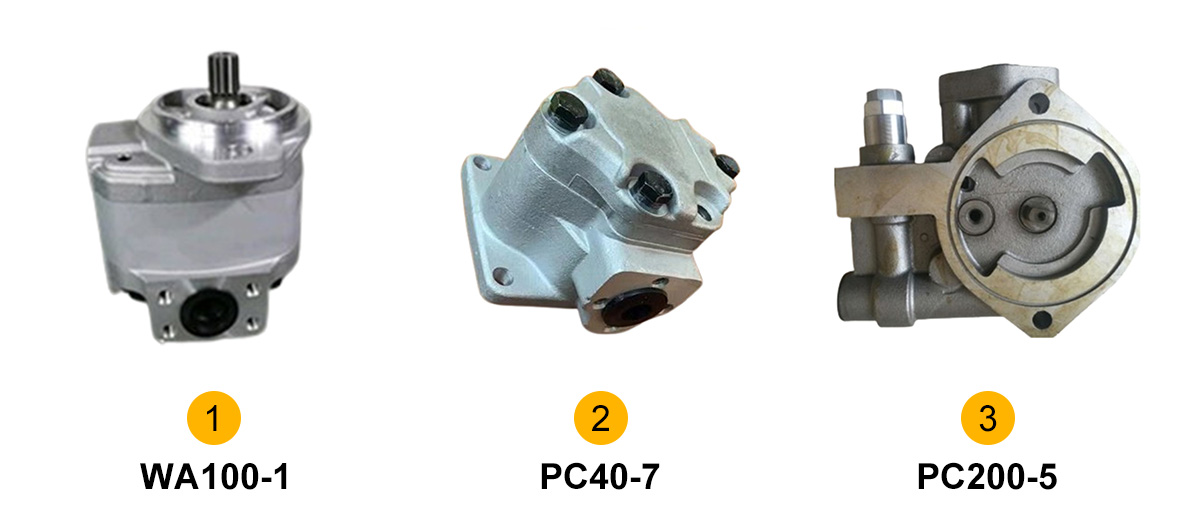
Gear pumps are the simplest and most cost-effective hydraulic pumps, consisting of two intermeshing gears housed in a casing. As the gears rotate, they create a vacuum at the inlet, drawing hydraulic fluid in. The fluid is then trapped between the gear teeth and the casing, moving it to the outlet side where it’s discharged under pressure.
Gear pumps are valued for their compact size, low maintenance needs, and ability to handle high-viscosity fluids. However, they are less efficient than other types and are typically used in low-pressure applications, such as auxiliary systems in smaller excavators.
2.Vane Pumps
Vane pumps use a rotor with sliding vanes that press against the inner surface of an eccentrically mounted casing. As the rotor spins, the vanes extend and retract, creating expanding and contracting chambers. This action draws fluid into the expanding chambers and pushes it out through the contracting ones.
These pumps offer higher efficiency than gear pumps and operate more smoothly, making them suitable for medium-pressure systems. They are often used in excavator hydraulic circuits requiring consistent flow, such as those controlling the boom or bucket.
3.Piston Pumps
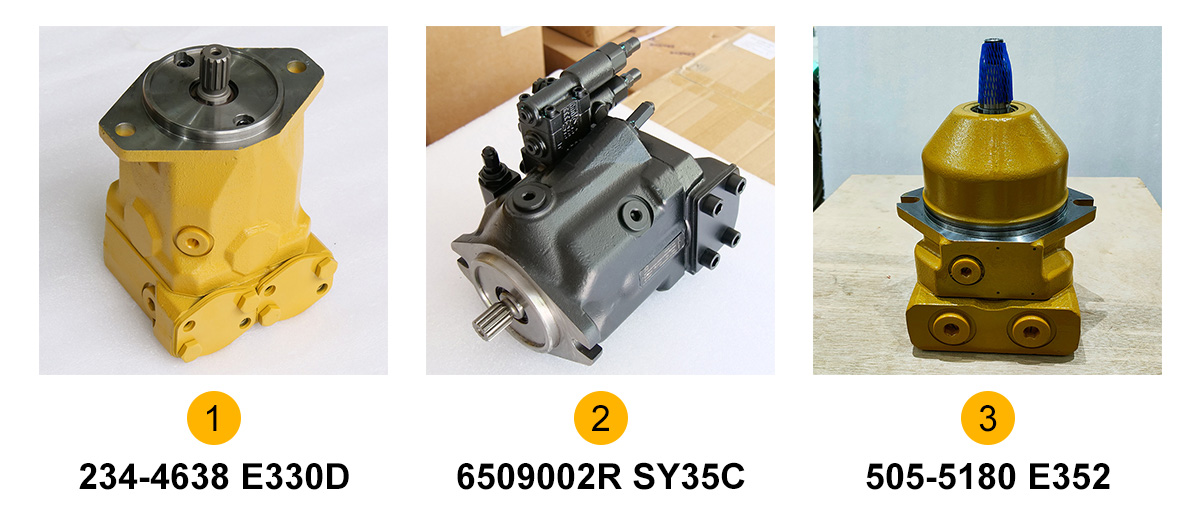
Piston pumps are the most efficient and powerful option, designed for high-pressure applications in large excavators. They use a series of reciprocating pistons within a cylinder block. As the block rotates, the pistons move in and out, drawing fluid in during the intake stroke and forcing it out under high pressure during the compression stroke.
Piston pumps are further divided into axial (pistons parallel to the drive shaft) and radial (pistons arranged radially) designs. Axial piston pumps are more common in excavators due to their high power density and ability to vary flow rates, adapting to changing loads.
How Do Hydraulic Pumps Work?
Hydraulic pumps operate on the principle of Pascal’s Law, which states that pressure applied to a fluid in a closed system is transmitted equally in all directions. Here’s a step-by-step breakdown of their operation in an excavator:
1.Mechanical Input
The pump is driven by the excavator’s engine, typically via a driveshaft or belt, converting rotational mechanical energy into hydraulic energy.
2.Fluid Intake
As the pump’s internal components (gears, vanes, or pistons) rotate, they create a low-pressure zone at the inlet port, drawing hydraulic fluid from the reservoir.
3.Fluid Displacement
The fluid is trapped and moved through the pump’s housing to the outlet port, where the volume is reduced, increasing pressure.
4.Pressure Distribution
The pressurized fluid is sent through hydraulic hoses to actuators (cylinders or motors), which convert the hydraulic energy back into mechanical motion—powering the excavator’s arm, bucket, or tracks.
5.Return Cycle
After acting on the actuators, the fluid returns to the reservoir, where it’s filtered and cooled before being recirculated.
This closed-loop system ensures efficient power transmission, allowing excavators to lift heavy loads and perform precise movements with minimal energy loss.
How Can a Hydraulic Pump Be Repaired?
Hydraulic pump failure can halt operations, so timely repairs are crucial. Common issues include leaks, reduced pressure, strange noises, or overheating. Here’s a general repair process:
1.Diagnosis
Technicians use pressure gauges, flow meters, and visual inspections to identify problems. Leaks may stem from damaged seals or loose fittings, while noise could indicate cavitation (air in the system) or worn components.
2.Disassembly
The pump is removed from the excavator and disassembled in a clean environment to avoid contaminating internal parts.
3.Part Replacement
Worn or damaged components—such as gears, vanes, pistons, bearings, or seals—are replaced with OEM (Original Equipment Manufacturer) or high-quality aftermarket parts.
4.Reassembly
The pump is reassembled with precise torque specifications to ensure proper alignment and function.
5.Testing
After reinstallation, the system is tested for pressure, flow, and leaks. Fluid levels and filtration are checked to prevent future issues.
Preventive maintenance, such as regular fluid checks, filter replacements, and keeping the system clean, can reduce the need for major repairs.
Is a Refurbished Hydraulic Pump a Good Option?
Refurbished hydraulic pumps—those rebuilt to meet OEM specifications—can be a cost-effective alternative to new pumps, but their suitability depends on several factors:
Pros:
Lower Cost: Refurbished pumps typically cost 30–50% less than new ones, making them ideal for budget-conscious operations.
Sustainability: Reusing components reduces waste and environmental impact.
Reliability: Reputable refurbishers test pumps rigorously, ensuring they meet performance standards.
Cons:
Shorter Warranty: Refurbished pumps often have shorter warranties than new ones.
Quality Variability: Poorly refurbished pumps may fail prematurely, so choosing a trusted supplier is critical.
A refurbished pump is a good option if it’s certified by a reputable provider, comes with a warranty, and the cost savings align with your maintenance budget. For critical applications where downtime is costly, a new pump may be more reliable.
Conclusion
The hydraulic pump is the lifeline of an excavator’s hydraulic system, enabling its powerful and precise movements. Understanding the differences between gear, vane, and piston pumps helps in selecting the right equipment for specific tasks. Proper maintenance and timely repairs—whether using new or refurbished parts—ensure longevity and efficiency. By prioritizing pump care, operators can maximize uptime and extend the lifespan of their excavators, ultimately boosting productivity on the job site.
If you are interested, please come and contact us