Learn the best practices for using oil and filters with Kyotechs’ guide. Discover how to maintain your equipment efficiently and extend its lifespan. Optimize performance with our expert tips on oil and filters usage.
Using the right fluids and filters in your equipment is essential to achieving optimal performance. Choosing the right products and performing the correct maintenance will boost performance, improve your emissions system, and increase fuel economy. With so many options on the market, determining the right fluids and filters can be a complex task. Even seemingly similar options, cheap and poor quality substitutes can cause operating problems. Choosing products recommended by the equipment manufacturer ensures you get the right products. Kyotechs technicians know the equipment best. They can provide you with the right products and accurate equipment maintenance information to keep it running at its best.
Choosing the Right Oil for Your Machine
In order for motorized equipment to run at its best, it is necessary to use the right engine oil. The oil must also be clean and have the proper viscosity to lubricate the engine parts that make the machine run.
1. Oil Viscosity and Standard Grades
Viscosity (or thickness) is one of the most important factors to consider when choosing an engine oil. The right oil viscosity is critical to the performance of the engine. Some engines require the use of mineral oil-based oils.
2. The impact of dirty oil on the engine
One of the most expensive mistakes for diesel engines is neglecting to change the oil. Dirty oil can seriously damage your engine, leading to expensive repair bills.
Choose the right filter for your machine
To ensure the performance and life of your mobile equipment, the engine filter must always be kept clean and intact. Mobile machinery usually contains the following engine filters:
- Oil filter – an engine component used to keep the oil clean and pure
- Transmission filter – a component used to capture excess oil in the transmission
- Hydraulic filter – an engine component used to balance temperature and keep the system sealed
- Air filter – a component used to protect the engine from external dust and dirt
- Coolant filter – a filter used to distribute coolant and remove contaminants
For any mobile equipment, it is critical to choose a filter that matches the corresponding brand and model. If the filter is not matched to the relevant component, it may cause improper oil distribution and allow contaminants to flow through the system without restriction. To ensure you use the correct type of filter every time, consult your machine’s owner’s manual or search online to see which size and brand of filter will work with the component in question.
What an Oil Filter Does
Oil filters are essential to the longevity and efficient operation of heavy equipment. They help remove contaminants from various oils that can damage internal components over time. With Cat Oil Filters, equipment owners can count on the long-lasting cleanliness and performance of their oil filtration system.
If you change your own oil, always use the type recommended by the manufacturer. There are three types of oil:
- Conventional oil – Made up of 75-80% crude oil
- Synthetic oil – Based on synthetic ingredients
- Blended oil – A mix of conventional and synthetic oils
Additives are listed next to the various motor oil brands on most shelves. Antioxidants are a common additive that prevents the oil from oxidizing and thickening. Other additives include detergents that prevent dirt from building up on hot surfaces. Additives even help remove contamination from engine parts.
Importance of Filter Performance
For hydraulic systems, equipment performance depends on cleanliness. Clean equipment can operate more safely and reliably, and in the long run, it can reduce costs.
How to Keep Hydraulic Filters Clean?
The condition of any hydraulic equipment can be judged by the quality of its filtration. If the filter is in poor condition, the performance of the equipment will decline. As long as the filtration is not adequate, the oil inside the internal components will be susceptible to impurities. Hydraulic filters are essential to the health of the engine. Hydraulic filters have four main purposes:
- Clean the oil that provides power between the power unit and the actuator
- Keep the system sealed
- Provide lubrication and prevent surface friction
- Maintain temperature balance and even heat transfer
If any of these functions are not working properly, the entire hydraulic system may become unbalanced and stop working. A clean hydraulic filter can prevent these problems by keeping the system clean, sealed, lubricated, and cooled.
Importance of Transmission Filters
The transmission plays a key role in the operation of heavy equipment. One of the most important parts of the transmission is the filter, which sits on top of the transmission oil pan and collects the oil. Below the transmission filter is an oil suction line connected to the oil pump. The oil pump controls the transmission oil pressure. Before the lubricating oil enters the transmission, the filter removes impurities such as dust and dirt.
Importance of Air Filters
The air filter blocks dirt, dust, and debris that can cause damage if they enter the engine. With a clean air filter, the equipment’s fuel economy and performance are better. A clean air filter also reduces emissions.
Importance of Coolant Filters
The coolant filter’s job is to distribute coolant additives into the engine. At the same time, the coolant filter also protects the engine from contaminants. If the coolant filter is clogged with dust and impurities, it will not be able to cool the engine components, causing the machine to overheat during peak operation.
Engine Lubrication Issues
Filters and fluids must be checked regularly to ensure maximum cleanliness and long life. If lubrication is not performed regularly and correctly, problems can occur. The most common problems include:
- Over-lubrication – If bearings are over-lubricated, the metal may become overheated, especially at high engine speeds.
- Under-lubrication – If bearings are under-lubricated, friction between metal parts can cause wear and corrosion.
- Mixing oil and grease – While both lubricants have benefits, they should never be mixed in the same application.
- Water allowed in lubricants – The job of lubricants is to isolate metal surfaces from corrosive elements, including water. Oil-water separators help ensure that these incompatible fluids do not mix inside the machine.
One of the worst mistakes is using the wrong type of lubricant for your engine. Oil and grease each have advantages and disadvantages and should be selected based on different applications.
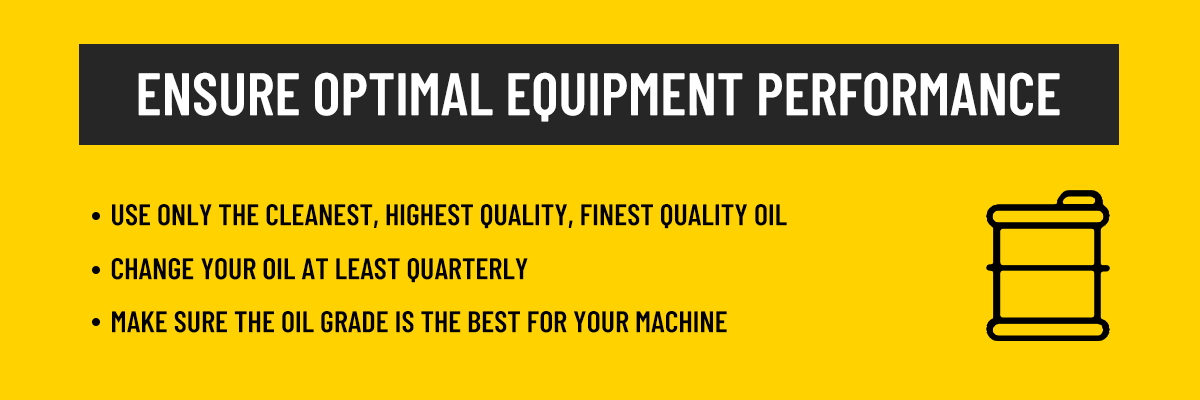
Proper maintenance with KYOTECHS engineers
The right fluid and filtration system is essential for optimal and lasting performance. If the fluid loses the proper viscosity or is mixed with impurities, critical engine functions may fail.
At Kyotechs, we help equipment owners achieve the best equipment maintenance results. We promptly help customers in need to solve all their problems and questions. If you have any questions about your equipment maintenance or encounter unsolvable problems, please come and consult us.