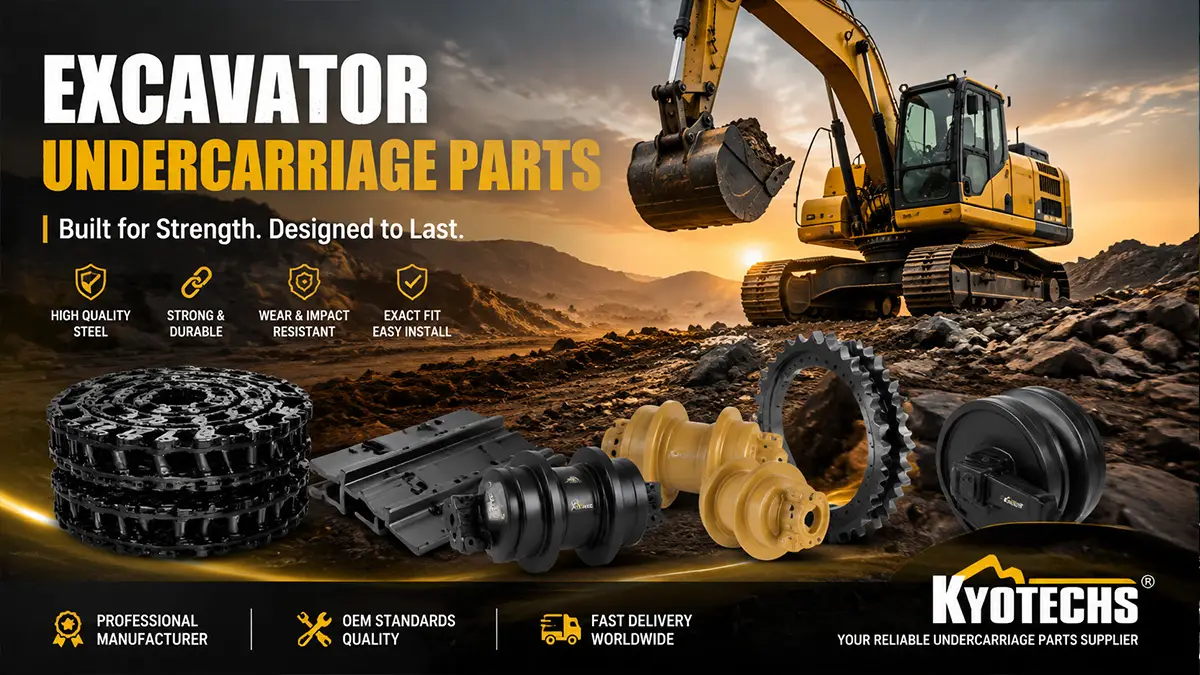
The excavator undercarriage system is one of the most important structural components of a crawler excavator. It supports the entire machine weight, provides stability, and transfers engine power to the ground to enable movement. Since undercarriage parts constantly operate under heavy loads, harsh working conditions, and continuous friction, they are among the fastest-wearing components of an excavator.
What Are the Main Components of an Excavator Chassis?
The excavator chassis, also known as the undercarriage system, consists of several key components that work together to support machine movement and stability.
1. Track Chain (Track Link Assembly)
The track chain is one of the primary load-bearing components of the undercarriage. It consists of track links, pins, and bushings that connect together to form a continuous track.
The track chain transfers the driving force from the sprocket to the ground, allowing the excavator to move forward, backward, and turn.
Common wear issues include:
- Track link elongation
- Pin and bushing wear
- Cracks or damage caused by excessive impact
2. Track Shoes
Track shoes are the parts that directly contact the ground. They provide traction and help the excavator operate on different terrains, including mud, sand, rocks, and construction sites.
Different working conditions require different track shoe designs:
- Single grouser shoes: Suitable for general construction work
- Double grouser shoes: Provide better balance and stability
- Triple grouser shoes: Reduce ground pressure and improve traction
Incorrect track shoe selection can accelerate wear on the entire undercarriage system.
3. Track Rollers
Track rollers support the weight of the excavator and guide the track chain along the lower frame.
During operation, rollers experience continuous pressure and impact. Poor lubrication or damaged seals can cause:
- Roller surface wear
- Oil leakage
- Bearing failure
4. Carrier Rollers (Top Rollers)
Carrier rollers support the upper section of the track chain and help maintain smooth track movement.
Although they carry less load than bottom rollers, worn carrier rollers can cause track vibration and uneven wear.
5. Sprocket
The sprocket transfers power from the final drive motor to the track chain.
The teeth of the sprocket engage with the track bushings. Excessive wear can cause poor engagement, increased vibration, and accelerated track chain damage.
6. Front Idler
The front idler guides the track chain and maintains proper track tension.
A damaged or worn idler can lead to:
- Track misalignment
- Uneven track wear
- Increased stress on other undercarriage components
7. Track Adjuster and Recoil Spring
The track adjuster controls track tension by adjusting the position of the front idler.
Proper track tension is essential because:
- Loose tracks may cause derailment
- Over-tight tracks increase component wear and fuel consumption
Common Causes of Excavator Chassis Wear
Understanding the causes of undercarriage wear helps operators take preventive measures.
1. Working in Harsh Conditions
Excavators often operate in environments such as:
- Rocky areas
- Muddy construction sites
- Mining operations
- Demolition sites
Small rocks and debris can enter between components, causing accelerated wear.
2. Incorrect Track Tension
Track tension has a major impact on component lifespan.
Over-tightened tracks:
- Increase friction between track components
- Increase fuel consumption
- Accelerate roller and sprocket wear
Loose tracks:
- Cause track derailment
- Increase impact loads
- Damage track links and idlers
3. Poor Cleaning and Maintenance
Mud, sand, and stones trapped inside the undercarriage increase friction and prevent proper movement.
Without regular cleaning, contaminants can damage:
- Roller seals
- Track links
- Sprocket teeth
4. Incorrect Operating Methods
Poor driving habits can significantly increase undercarriage wear.
Examples include:
- Frequent high-speed travel
- Sharp turns on hard surfaces
- Operating continuously on uneven terrain
- Excessive reverse travel
5. Lack of Regular Inspection
Ignoring small problems can lead to expensive repairs.
For example:
A slightly worn sprocket can damage the track chain, causing the replacement cost of multiple components.
How to Properly Maintain Excavator Undercarriage Components?
Regular maintenance is the key to maximizing undercarriage life.
1. Clean the Undercarriage Regularly
After working in muddy or sandy environments, clean the undercarriage system.
Remove:
- Mud
- Rocks
- Construction debris
Cleaning should focus on areas around:
- Track rollers
- Sprocket
- Idler
- Track chain
A clean undercarriage reduces unnecessary friction and improves inspection accuracy.
2. Check Track Tension Frequently
Operators should inspect track tension regularly according to working conditions.
A simple inspection method:
- Lift one side of the excavator using the boom and arm.
- Rotate the track slowly.
- Measure the track sag between the top rollers.
Adjust track tension according to the manufacturer’s specifications.
3. Inspect Track Components Daily
Before operation, check for:
- Loose track bolts
- Cracked track shoes
- Oil leakage from rollers
- Abnormal noises
- Damaged sprocket teeth
Early detection can prevent major failures.
4. Lubricate Properly
Although many undercarriage components are sealed, some parts require proper lubrication.
Check:
- Track adjuster grease condition
- Roller oil leakage
- Final drive lubrication
Using the correct lubricant helps reduce friction and heat.
5. Rotate and Replace Components When Necessary
Some excavator undercarriage parts can be rotated to achieve more even wear.
For example:
- Track chains can sometimes be reversed
- Track shoes can be rotated or replaced
- Rollers can be inspected and replaced individually
This helps maximize component usage.
How to Extend Excavator Undercarriage Service Life?
Besides routine maintenance, proper operation habits can greatly extend undercarriage lifespan.
1. Choose the Correct Track Shoe
Select track shoes based on working conditions.
For example:
- Soft soil: Wider track shoes provide better flotation
- Rocky terrain: Heavy-duty shoes provide better durability
- General construction: Standard shoes offer balanced performance
2. Avoid Excessive High-Speed Travel
High-speed movement increases:
- Roller temperature
- Track impact
- Component stress
Operate at appropriate speeds, especially on uneven surfaces.
3. Reduce Unnecessary Turning
Sharp turns create high side loads on:
- Track links
- Rollers
- Sprockets
When possible, use gradual turning methods.
4. Operate on Suitable Ground Conditions
Avoid unnecessary operation on:
- Extremely rocky surfaces
- Deep mud
- Uneven slopes
Choosing proper working paths reduces undercarriage stress.
When Should Excavator Chassis Parts Be Replaced?
Knowing when to replace undercarriage parts helps prevent sudden failures.
1. Track Chain Replacement Signs
Replace the track chain when:
- Track links are excessively stretched
- Pins and bushings are worn beyond limits
- Cracks appear on links
2. Sprocket Replacement Signs
A worn sprocket may show:
- Sharp or pointed teeth
- Poor engagement with track bushings
- Excessive vibration during travel
3. Roller Replacement Signs
Replace rollers if:
- Oil leakage occurs
- Roller rotation becomes abnormal
- Surface wear exceeds limits
4. Idler Replacement Signs
A front idler should be replaced when:
- It becomes damaged
- Track alignment problems occur
- The tension adjustment system fails
5. Track Shoe Replacement Signs
Replace track shoes when:
- Grouser height becomes too low
- Shoes are cracked or bent
- Bolts become loose repeatedly
Conclusion
The excavator undercarriage system plays a critical role in machine performance, stability, and productivity. Since undercarriage components operate under continuous stress, proper maintenance is essential to reduce wear and avoid costly repairs.
Regular cleaning, correct track tension adjustment, daily inspections, proper operating methods, and timely replacement of worn components can significantly extend the service life of excavator undercarriage parts.
If you have any technical questions or would like to learn more about our products, please feel free to contact us.
FAQs
1. How often should excavator undercarriage parts be inspected?
Excavator undercarriage components should be inspected daily before operation. A detailed wear inspection should be performed every 250-500 operating hours.
2. What is the most expensive excavator undercarriage part?
The track chain assembly is usually one of the most expensive undercarriage components because it contains multiple parts including links, pins, and bushings.
3. How can I reduce excavator undercarriage wear?
You can reduce wear by:
- Maintaining correct track tension
- Cleaning the undercarriage regularly
- Avoiding excessive turning
- Operating at proper speeds
- Replacing worn parts promptly
4. Why does my excavator track keep coming off?
Common reasons include:
- Incorrect track tension
- Worn idler or rollers
- Damaged track links
- Excessive debris buildup inside the track system