Discover the essential components of an excavator with Kyotechs. Learn about the main parts like the boom, arm, bucket, and undercarriage that make our excavators efficient and reliable. Explore more at Kyotechs.
Understanding the basic parts of an excavator and how they work can help you choose, use, and maintain the machine. You will learn what each part means, what it does, and how the parts fit together. Here are the main parts of an excavator:
1. Boom
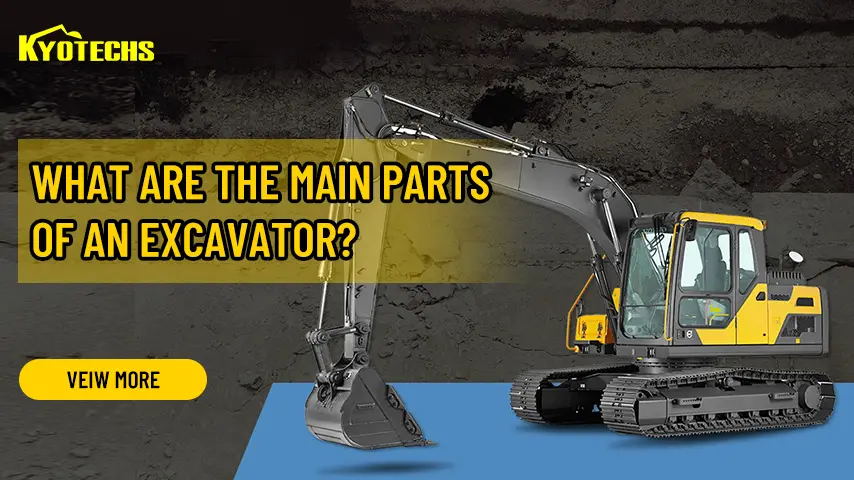
The boom is an essential part of an excavator. This large, main part extends outward from the body of the machine. It primarily provides the excavator with reach, allowing the operator to precisely position the stick and bucket for digging, lifting, or placing material. Booms come in a variety of lengths and configurations, depending on the intended use of the excavator. Long booms are typically used for tasks that require a greater reach, while short booms are better suited for working in tight spaces.
2. Arm
The boom, also called the stick, connects the boom and bucket and helps control digging depth and precision. By telescoping the boom, the operator can adjust the distance between the boom and bucket for precise digging, grading, and lifting. The length of the boom depends on the size of the excavator. Small excavators have shorter booms for more maneuverability in tight spaces, while larger excavators have longer arms for deeper digging.
3. Bucket
The bucket is the attachment at the end of the boom that digs, scoops, and carries materials. Buckets come in a variety of shapes and sizes, each designed for a specific task. Excavator buckets typically have teeth or cutting edges for breaking up hard soil or rock. They can be replaced with other attachments, such as a grapple or thumb, to expand the capabilities of the excavator. The size and shape of the bucket can significantly affect productivity and efficiency, so it is important to choose the right bucket for the application.
4. Cab
The cab is the driver’s cabin, which houses the driver’s seat and control panel. This is where the operator controls the machine’s functions, using a variety of controls, levers, and pedals to operate the boom, arm, bucket, and other movements, such as swiveling and driving. Modern excavator cabs feature air conditioning, ergonomic seats, and advanced technology to improve operator safety, comfort, and productivity.
5. Chassis
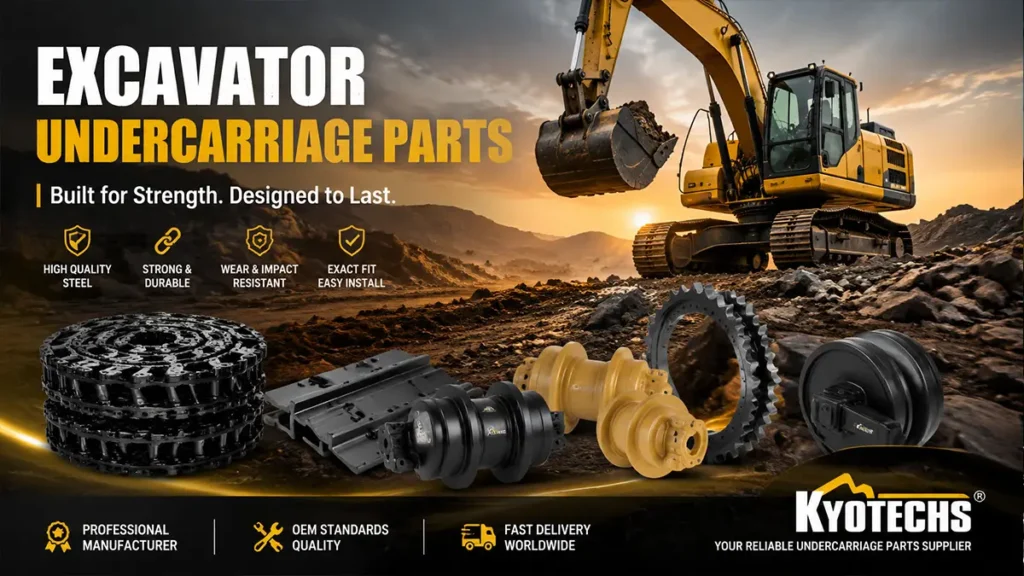
The chassis of an excavator supports the weight of the machine, provides stability and facilitates mobility. Depending on the type of excavator, the chassis includes tracks or wheels. Tracks provide excellent traction and weight distribution, allowing crawler excavators to travel more easily on rough terrain. Wheeled excavators have the greatest flexibility on smooth surfaces such as asphalt and have greater maneuverability. The chassis may have features such as adjustable width or retractable tracks to adapt to various site conditions, ensuring the stability and maneuverability of the excavator.
6. Engine
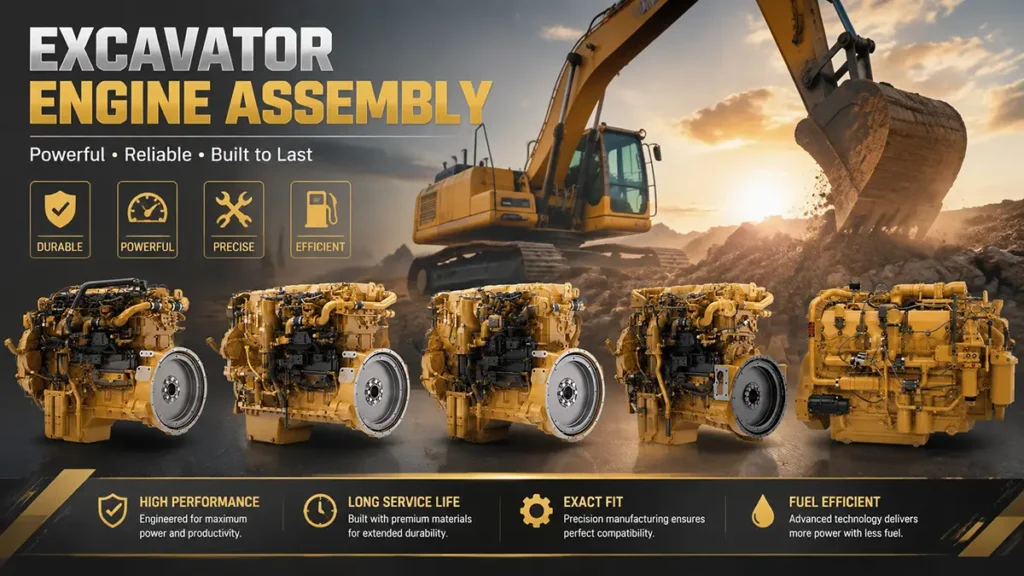
Excavator engines usually use diesel. The size and output of the engine depend on the specifications of the excavator and how it is used. Modern engines are designed to improve efficiency and reduce emissions to meet strict environmental standards. The engine powers the operation of the excavator and provides the energy required for the hydraulic system to operate.
7. Hydraulic system
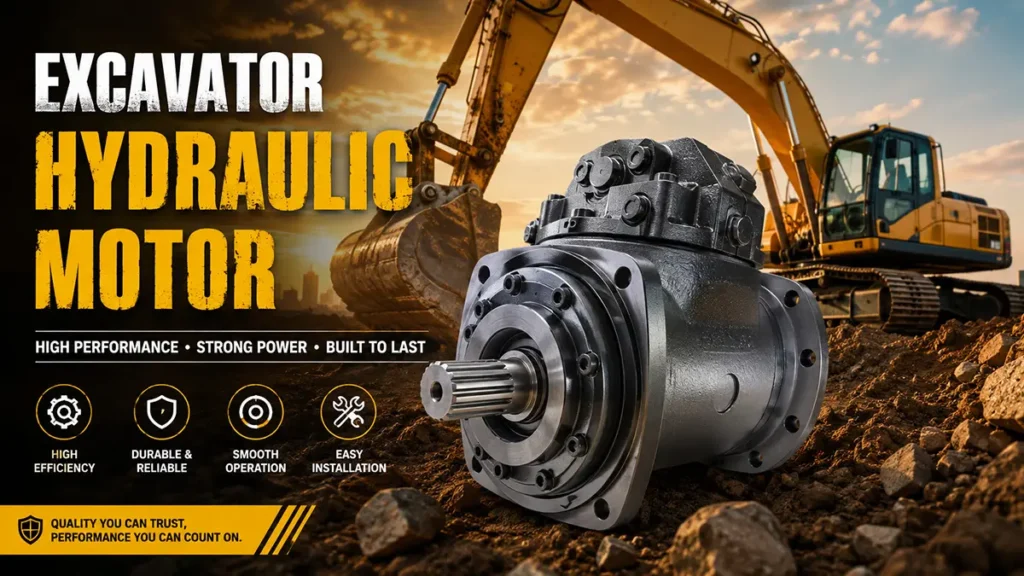
The hydraulic system of an excavator is a complex network of high-pressure hoses, pumps, valves and cylinders that are used to control the movement of the boom, dipper and bucket. The operator manipulates these components through the hydraulic system to complete the task. Responsive and powerful, the hydraulic system is an essential component of an excavator. It provides the force required to perform heavy tasks while ensuring precision and control for the operator.
8. Counterweight
The counterweight is a heavy component that is usually located at the rear of the excavator. It provides balance and stability during lifting and digging operations. Since the bucket at the front of the excavator is often loaded with material, the counterweight counteracts the weight of this material and prevents the excavator from tipping over. The counterweight is adjustable and can be customized to the specific requirements of the machine, ensuring safe operation and preventing accidents.
9. Slewing
The slewing device is usually mounted on the machine base and allows the excavator to rotate 360 degrees. This feature is essential for accurately and efficiently positioning the bucket without repositioning the entire machine. The operator can easily slew the excavator to reach different work areas. This greatly increases productivity and versatility because the excavator can work within a larger radius without moving the chassis.
10. Blade
Some excavators are equipped with an optional blade on the front end for leveling and finishing sites. The operator can adjust the blade to control grading depth and angle, which is critical for projects that require precise earthmoving and grading. The blade complements the excavator’s digging and material handling capabilities, making it a versatile machine that can be used for site preparation and finish grading work.
Kyotechs Machinery is a company that makes excavator accessories. We operate all kinds of brands. If you are interested in this, please come in and consult