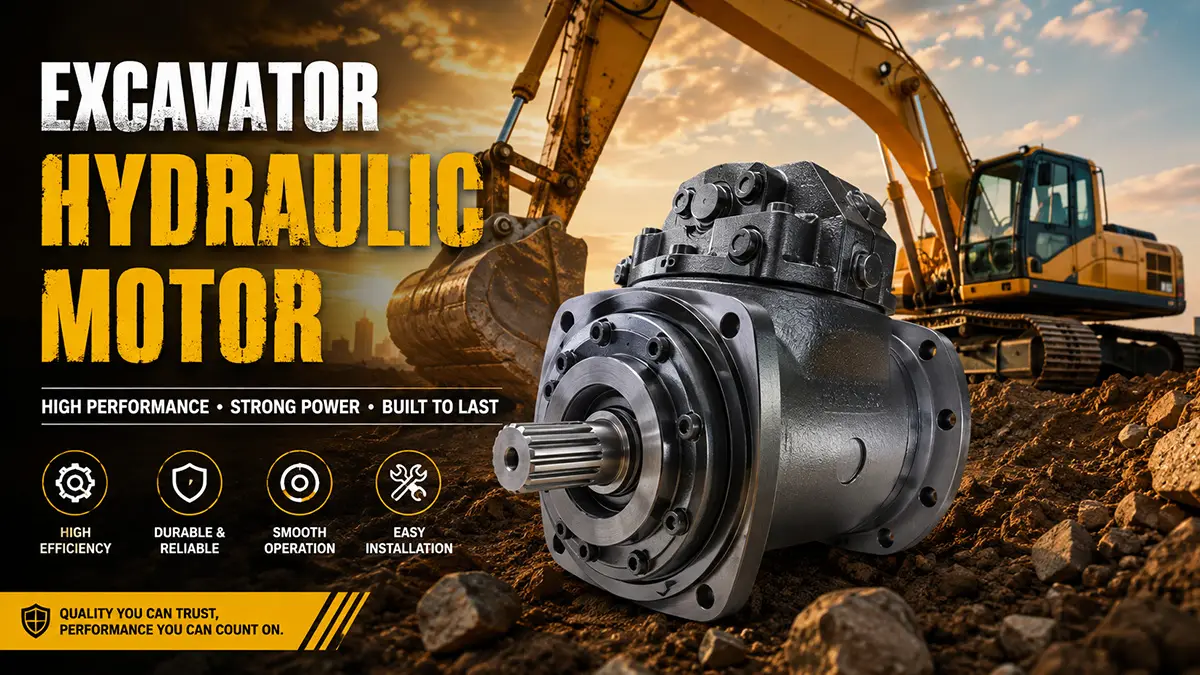
An excavator’s hydraulic motor is a critical component of the hydraulic system. It converts hydraulic energy from pressurized oil into mechanical rotation, allowing the excavator to perform essential functions such as traveling, swinging, and operating attachments.
What Are the Most Common Problems in Hydraulic Systems?
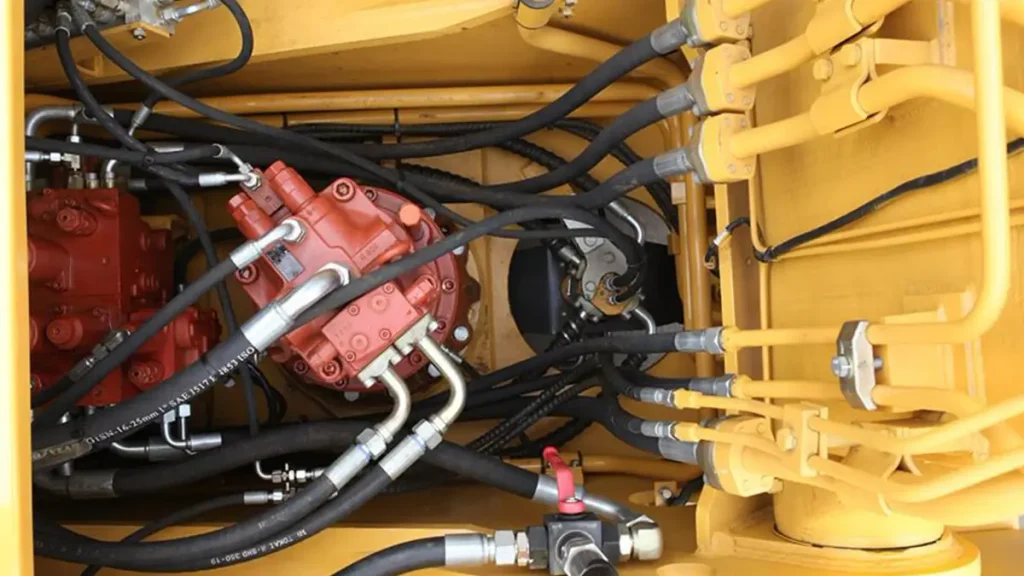
Before replacing a hydraulic motor, it is important to understand that many excavator hydraulic problems have similar symptoms.
1. Low Hydraulic Pressure
Insufficient hydraulic pressure is one of the most common causes of weak hydraulic performance.
If the hydraulic pump cannot generate enough pressure, the hydraulic motor may not receive sufficient energy to produce the required torque.
Typical symptoms include:
- Slow travel speed
- Weak swing operation
- Reduced attachment performance
- Difficulty climbing slopes
- Hydraulic motor lacking torque
However, low hydraulic pressure does not necessarily mean the hydraulic motor is damaged. The hydraulic pump, pressure relief valve, control valve, or other components may be responsible.
2. Hydraulic Oil Contamination
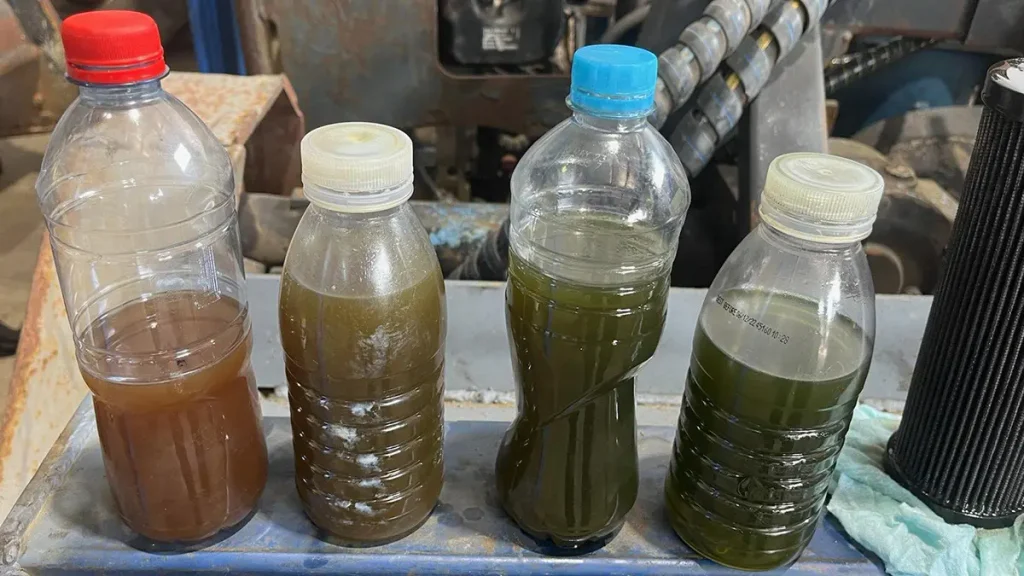
Hydraulic oil carries power throughout the entire hydraulic system. If the oil contains dirt, metal particles, water, or other contaminants, it can accelerate wear inside the hydraulic motor.
Contaminated oil may damage:
- Pistons
- Cylinder blocks
- Valve plates
- Bearings
- Seals
- Hydraulic pump components
Regularly checking hydraulic oil condition and replacing filters according to the manufacturer’s maintenance schedule can significantly reduce hydraulic motor wear.
3. Hydraulic Oil Leakage
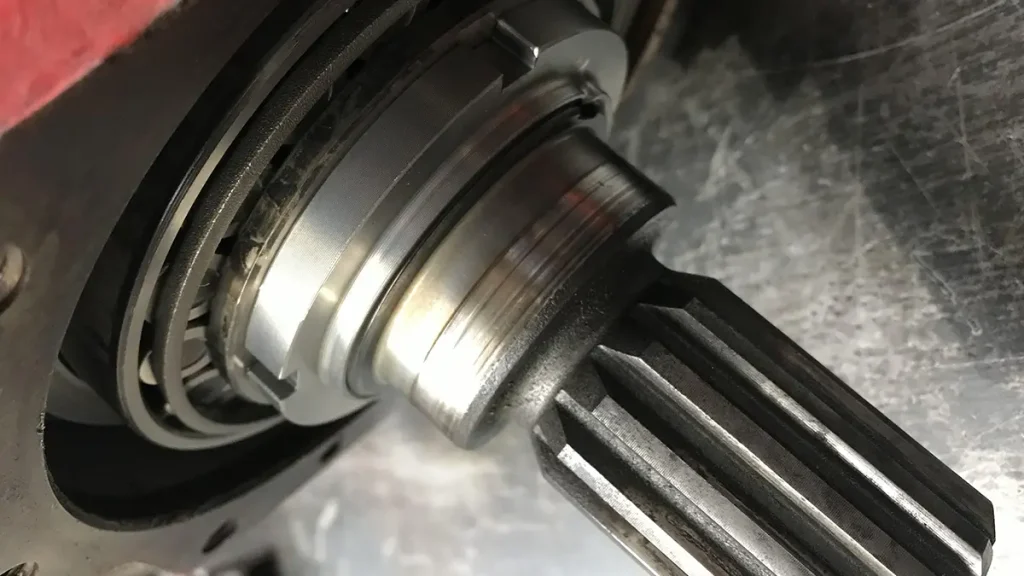
External oil leakage is another common hydraulic system problem.
Leaks may occur around:
- Hydraulic motor seals
- Shaft seals
- Hydraulic hose connections
- O-rings
- Motor housing
- Hydraulic fittings
If the leakage is coming directly from the hydraulic motor, worn seals or damaged internal components may need to be inspected.
4. Hydraulic System Overheating
Excessive hydraulic oil temperature can indicate problems such as internal leakage, excessive pressure, restricted oil flow, or inefficient hydraulic components.
A damaged hydraulic motor may generate excessive heat because internal components are worn and hydraulic energy is being converted into heat instead of mechanical power.
How to Determine If a Hydraulic Motor Is Damaged?
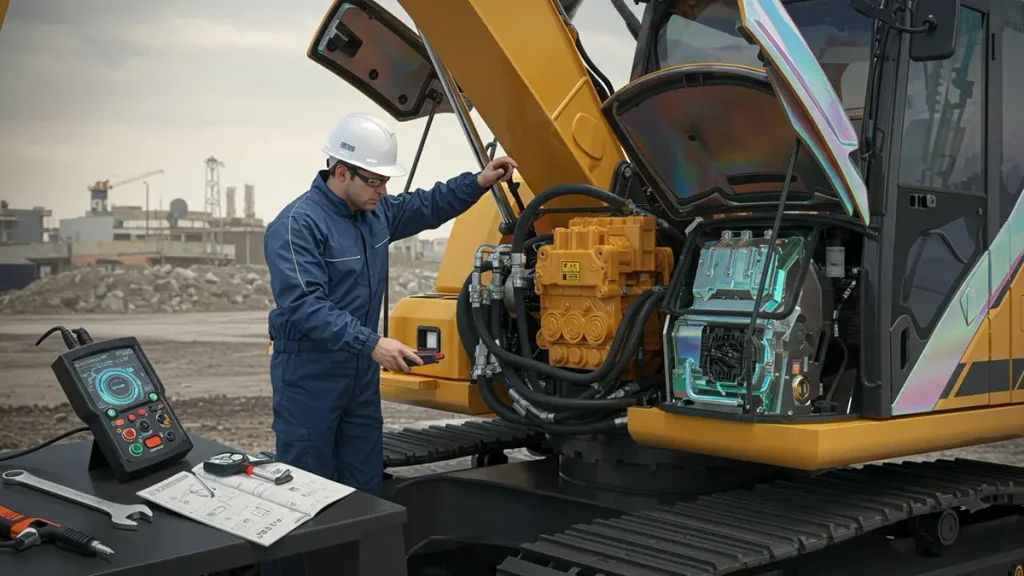
Determining whether an excavator hydraulic motor is damaged requires a systematic inspection. Instead, combine performance testing, visual inspection, hydraulic pressure testing, noise analysis, temperature checks, and internal inspection.
Step 1: Check for Abnormal Hydraulic Motor Performance
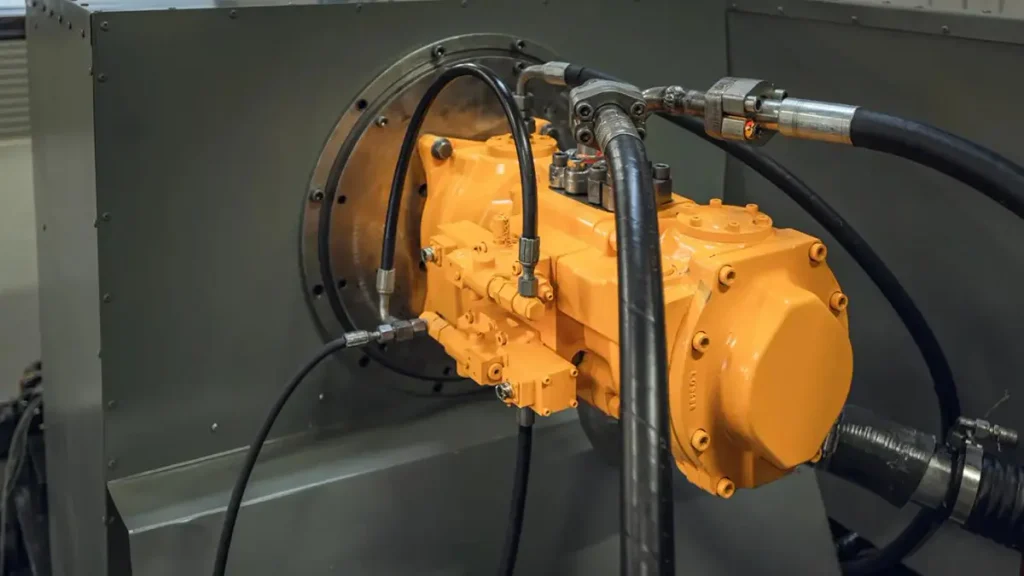
Start with the simplest test: observe how the excavator operates.
A damaged hydraulic motor may produce noticeable changes in machine performance.
For example, a travel motor problem may cause:
- One track moving slower than the other
- Excavator drifting to one side
- Weak climbing ability
- Reduced travel speed
- Track movement stopping under load
A swing motor problem may cause:
- Slow upper-structure rotation
- Weak swing force
- Jerky rotation
- Difficulty stopping smoothly
- Abnormal swing noise
These symptoms are important warning signs, but they do not prove that the motor itself is defective.
Step 2: Check for Hydraulic Oil Leakage
Inspect the hydraulic motor carefully for signs of oil leakage.
Pay particular attention to:
- Motor shaft seal
- Housing joints
- Hydraulic ports
- O-rings
- Hose connections
- Drain line
Fresh hydraulic oil around the motor is a strong indication that further inspection is necessary.
If the shaft seal is leaking, replacing the seal may solve the problem. However, if excessive shaft play or internal wear is present, rebuilding or replacing the hydraulic motor may be necessary.
Step 3: Listen for Abnormal Noise
Hydraulic motors normally produce operating noise, but sudden changes in sound can indicate a problem.
Watch for:
- Grinding sounds
- Whining
- Knocking
- Screeching
- Unusual vibration
A high-pitched whining noise, however, can also be caused by cavitation, restricted oil flow, air entering the hydraulic system, or insufficient hydraulic oil.
Therefore, abnormal noise should be considered together with pressure, temperature, oil condition, and operating performance.
Step 4: Measure Hydraulic Pressure
Hydraulic pressure testing is one of the most effective methods for determining whether a hydraulic motor is functioning correctly.
A technician can use a hydraulic pressure gauge to compare the measured pressure with the manufacturer’s specified values.
If the motor receives insufficient pressure, the problem may be upstream rather than inside the motor.
Possible causes include:
- Hydraulic pump failure
- Relief valve problems
- Control valve malfunction
- Restricted hydraulic lines
- Clogged filters
- Incorrect hydraulic settings
If the correct pressure reaches the motor but the motor still produces insufficient torque or speed, internal motor wear becomes more likely.
Step 5: Check Hydraulic Motor Temperature
Compare the temperature of the hydraulic motor with normal operating conditions.
An abnormally hot motor may indicate excessive internal leakage or mechanical friction.
An infrared thermal camera can be useful for identifying abnormal temperature differences between hydraulic components.
Step 6: Inspect Hydraulic Oil and Filter
The hydraulic oil can provide valuable information about the condition of the motor.
Check for:
- Metal particles
- Unusual discoloration
- Burnt smell
- Water contamination
- Excessive dirt
Metal particles in the hydraulic oil can indicate abnormal wear of hydraulic components.
Step 7: Check for Internal Leakage
Internal leakage is one of the most important signs of hydraulic motor wear.
A hydraulic motor may look normal externally but still have significant internal wear.
This can result in:
- Low motor torque
- Slow rotation
- Poor performance under load
- Excessive heat
- Increased drain flow
A case-drain flow test can help determine whether internal leakage is excessive.
Step 8: Inspect the Hydraulic Motor Internally
If external testing indicates a motor problem, the hydraulic motor may need to be removed and disassembled.
Common internal components that should be inspected include:
- Pistons
- Cylinder block
- Valve plate
- Swash plate
- Bearings
- Shaft
- Seals
- Springs
Look for:
- Scratches
- Scoring
- Excessive wear
- Cracks
- Broken components
- Burn marks
- Abnormal metal debris
If critical components are severely worn or damaged, replacing the complete hydraulic motor may be more economical than rebuilding it.
Conclusion
Determining whether an excavator’s hydraulic motor is damaged requires more than simply looking for an oil leak or listening for abnormal noise.
The most reliable approach is to inspect the entire hydraulic system and gradually eliminate other possible causes.
Start by checking:
- Machine performance
- Hydraulic oil leakage
- Abnormal noise and vibration
- Hydraulic pressure
- Motor temperature
- Hydraulic oil and filter condition
- Internal leakage
- Internal motor components
If the hydraulic motor receives the correct hydraulic pressure but continues to show weak torque, excessive internal leakage, abnormal noise, overheating, or severe internal wear, the motor is likely damaged and should be repaired or replaced.
If you have any technical questions or would like to learn more about our products, please feel free to contact us.
FAQs
Q1: What are the most common symptoms of a bad excavator hydraulic motor?
The most common symptoms include slow movement, weak torque, abnormal noise, excessive heat, hydraulic oil leakage, vibration, and poor performance under load.
However, these symptoms can also be caused by hydraulic pumps, control valves, filters, or hydraulic lines.
Q2: Can a hydraulic motor be repaired?
Yes. Many hydraulic motors can be rebuilt by replacing worn seals, bearings, pistons, valve plates, or other damaged components.
Q3: Why is my excavator travel motor weak?
A weak travel motor can be caused by:
- Low hydraulic pressure
- Internal motor leakage
- Worn hydraulic motor components
- Faulty control valve
- Clogged hydraulic filter
- Contaminated hydraulic oil
- Damaged final drive
A pressure and case-drain flow test can help identify the actual cause.
Q4: Why is my hydraulic motor overheating?
A hydraulic motor may overheat because of excessive internal leakage, mechanical friction, excessive pressure, restricted hydraulic flow, contaminated oil, or incorrect hydraulic system settings.
Q5: Should I replace the hydraulic motor or rebuild it?
If the damage is limited to seals, bearings, or other replaceable components, rebuilding may be cost-effective.
If the motor has severe shaft damage, housing damage, or extensive internal wear, replacing the complete motor may be a better option.
Q6: Can low hydraulic pressure damage a hydraulic motor?
Low pressure itself does not necessarily damage the motor, but operating with inadequate hydraulic flow or pressure can cause poor performance and may be associated with cavitation, excessive heat, or other hydraulic problems. The root cause should be diagnosed before replacing the motor.
Q7: What should I check before buying a replacement hydraulic motor?
Before purchasing a replacement, confirm:
- Excavator brand and model
- Hydraulic motor type
- Motor part number
- Displacement
- Mounting dimensions
- Port configuration
- Hydraulic specifications
- Travel or swing application
Matching the correct specifications is essential for proper installation and performance.