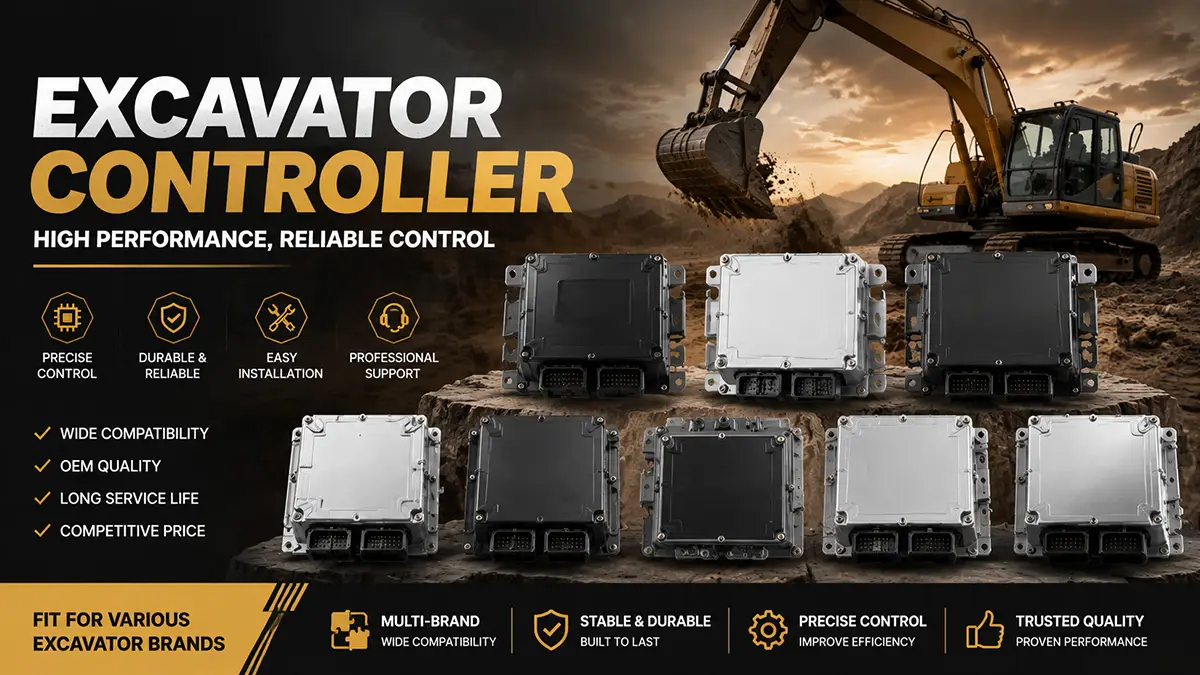
It often referred to as the “brain” of an excavator, this electronic control unit controls almost all of the machine’s mechanical and hydraulic movements. Even a minor malfunction in this component can lead to performance degradation, sudden shutdowns, or equipment damage.
What Is an Excavator Controller?
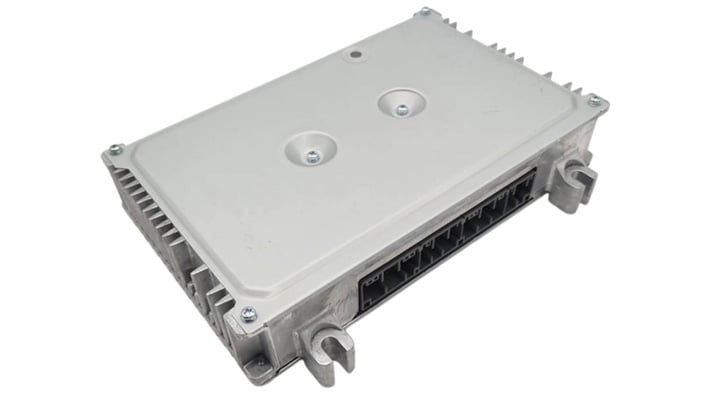
An excavator controller, also known as an excavator ECU (Electronic Control Unit) or excavator computer board, is one of the most important electronic components in modern excavators. It acts as the “brain” of the machine by receiving signals from different sensors, processing operating data, and controlling various systems to ensure efficient and precise operation.
The excavator ECU is usually installed inside the electrical control box or near the engine compartment. It communicates with components including sensors, solenoid valves, hydraulic pumps, monitors, and engine control systems through electrical signals.
A properly functioning excavator controller helps improve:
- Fuel efficiency
- Hydraulic performance
- Operating accuracy
- Engine stability
- Machine safety
What Are the Main Functions of an Excavator Controller?
The excavator controller performs multiple control and monitoring functions. Different brands and models may use different ECU systems, but the main functions are similar.
1. Engine Control
The excavator controller communicates with the engine ECU to regulate:
- Fuel injection quantity
- Engine speed
- Throttle control
- Engine protection functions
By analyzing sensor signals, the controller adjusts engine operation according to workload requirements.
2. Hydraulic System Control
The hydraulic system is the core power system of an excavator. The controller manages:
- Hydraulic pump displacement
- Solenoid valve operation
- Hydraulic pressure adjustment
- Flow control
This allows the excavator to perform smooth movements such as:
- Boom lifting
- Arm extension
- Bucket operation
- Swing rotation
- Travel movement
3. Sensor Data Processing
An excavator controller receives information from multiple sensors, including:
- Engine speed sensor
- Hydraulic pressure sensor
- Temperature sensor
- Fuel level sensor
- Position sensor
The controller analyzes these signals and makes real-time adjustments.
4. Communication Between Systems
Modern excavators use CAN communication networks. The excavator controller connects different electronic systems, including:
- Engine ECU
- Monitor panel
- Hydraulic controller
- Transmission system
This ensures all components work together efficiently.
5. Fault Detection and Protection
The controller continuously monitors machine conditions.
When abnormal conditions occur, it can:
- Store diagnostic fault codes
- Display warning messages
- Reduce engine power
- Activate safety protection modes
What Are the Main Components Inside an Excavator Controller?
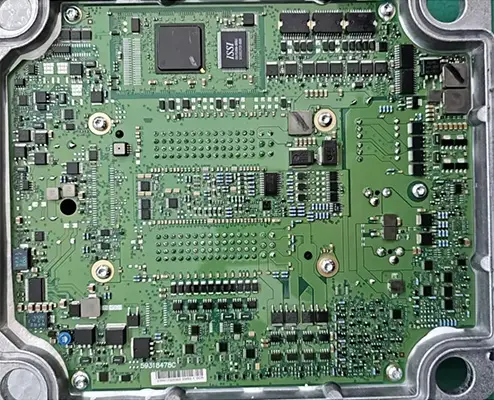
An excavator controller consists of several electronic components that work together to process and control machine operations.
1. Microprocessor (CPU)
The microprocessor is the core processing unit of the controller.
It is responsible for:
- Processing input signals
- Running control programs
- Calculating operating parameters
- Sending output commands
2. Memory Module
The memory stores important information such as:
- Control programs
- Machine parameters
- Fault records
- Calibration data
Common memory types include:
- Flash memory
- EEPROM
- RAM
3. Input and Output Circuits
The I/O circuits allow the controller to communicate with external components.
Inputs include:
- Sensor signals
- Switch signals
- Operator commands
Outputs include:
- Solenoid valve control
- Fuel injection signals
- Alarm signals
4. Power Supply Circuit
The power circuit converts the excavator battery voltage into stable electrical power required by the controller.
It protects the ECU from:
- Voltage fluctuations
- Electrical overload
- Short circuits
5. Communication Interface
Most modern excavator controllers include CAN communication modules.
They allow communication between:
- ECU
- Monitor
- Sensors
- Hydraulic controllers
How Does an Excavator Controller Work?
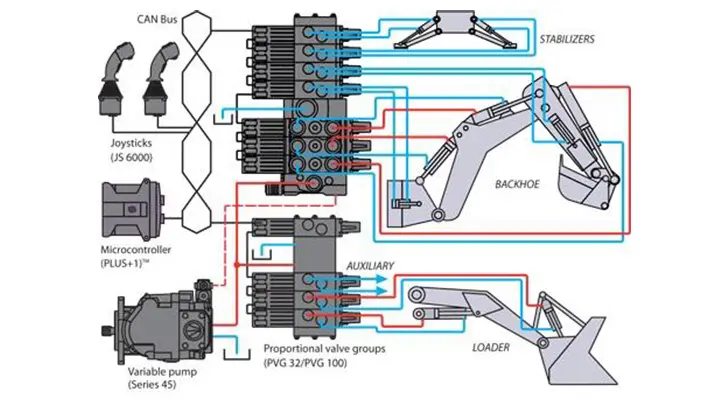
The working process of an excavator controller can be divided into four steps:
Step 1: Receiving Input Signals
Sensors collect real-time information from the excavator, such as:
- Engine speed
- Hydraulic pressure
- Oil temperature
- Joystick position
These signals are sent to the controller.
Step 2: Data Processing
The controller analyzes the collected information using programmed control logic.
For example:
When the operator moves the joystick, the controller calculates the required hydraulic flow and pressure.
Step 3: Sending Control Commands
After processing the data, the controller sends signals to:
- Hydraulic pump regulators
- Solenoid valves
- Engine systems
These commands adjust machine operation.
Step 4: Continuous Monitoring
The controller continuously checks system conditions and adjusts operation automatically.
This closed-loop control system improves:
- Performance
- Fuel economy
- Safety
What Are the Common Types of Excavator Controllers?
Excavator controllers can be classified according to their application.
1. Engine Controller (Engine ECU)
The engine controller manages:
- Fuel injection
- Engine speed
- Emission control
- Engine protection
2. Hydraulic Controller
The hydraulic controller controls:
- Hydraulic pump output
- Valve operation
- Pressure regulation
It directly affects excavator movement performance.
3. Main Machine Controller
The main controller coordinates different systems, including:
- Engine
- Hydraulic system
- Monitor
- Sensors
It is the central control unit of the excavator.
4. Monitor Controller
The monitor controller manages:
- Display information
- Warning alarms
- Diagnostic menus
It allows operators to check machine conditions.
What Are the Symptoms of a Bad Excavator Controller?
A faulty excavator controller can cause various performance problems.
1. Excavator Cannot Start
Possible causes:
- ECU power failure
- Communication failure
- Internal circuit damage
2. Engine Runs Abnormally
Symptoms include:
- Unstable RPM
- Low power output
- Engine shutdown
3. Hydraulic System Problems
A damaged controller may cause:
- Slow movement
- Weak digging force
- Hydraulic system response delay
4. Error Codes Appear
The monitor may display:
- ECU communication errors
- Sensor fault codes
- Controller failure alarms
5. Random Machine Malfunctions
Examples:
- Sudden loss of control
- Incorrect machine movements
- Intermittent failures
Why Does an Excavator Controller Fail?
Several factors can damage an excavator ECU.
1. Water or Moisture Damage
Water entering the controller housing can cause:
- PCB corrosion
- Short circuits
- Component failure
2. Electrical Problems
Common electrical causes include:
- Voltage spikes
- Battery failure
- Incorrect wiring
- Poor grounding
3. Excessive Heat
High temperatures can damage:
- Electronic chips
- Capacitors
- Circuit boards
4. Vibration and Mechanical Damage
Continuous vibration may loosen:
- Circuit connections
- Solder joints
- Internal components
5. Aging Components
After years of operation, electronic components may degrade and fail.
How to Diagnose an Excavator Controller Problem?
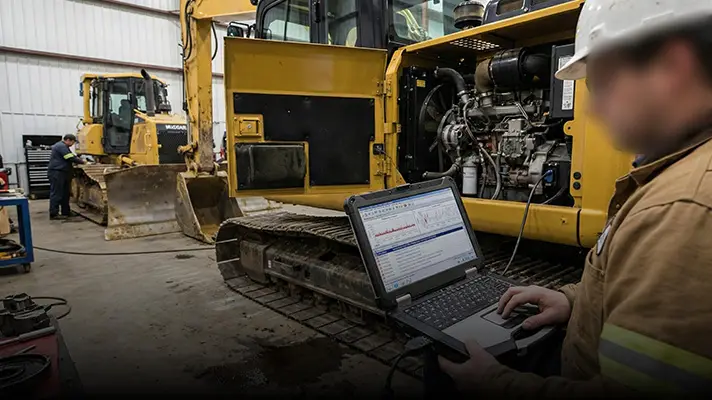
Follow these steps to diagnose controller problems:
1. Check Power Supply
Verify:
- Battery voltage
- ECU power input
- Ground connections
2. Check Error Codes
Use diagnostic software or service tools to read:
- Fault codes
- Communication errors
- Sensor failures
3. Inspect Wiring Harness
Check for:
- Broken wires
- Loose connectors
- Corrosion
4. Test Sensors and Actuators
Confirm that connected components are working properly.
A faulty sensor can sometimes appear as a controller problem.
5. Test or Replace the Controller
If all external components work normally, the ECU may require:
- Professional repair
- Reprogramming
- Replacement
Conclusion
The excavator controller (ECU) is the central electronic control unit responsible for managing engine operation, hydraulic performance, communication, and machine safety.
As excavators become more intelligent, controllers play an increasingly important role in improving efficiency and reliability.
If you have any technical questions or would like to learn more about our products, please feel free to contact us.
FAQs
Q1: What is an excavator controller?
An excavator controller is an electronic control unit that manages engine, hydraulic, and electrical systems by processing sensor data and sending control signals.
Q2: Is an excavator ECU the same as a computer?
Yes. An excavator ECU works like a specialized industrial computer designed for controlling excavator operations.
Q3: Can an excavator controller be repaired?
Yes. Some ECU failures can be repaired through PCB repair, component replacement, or software programming.