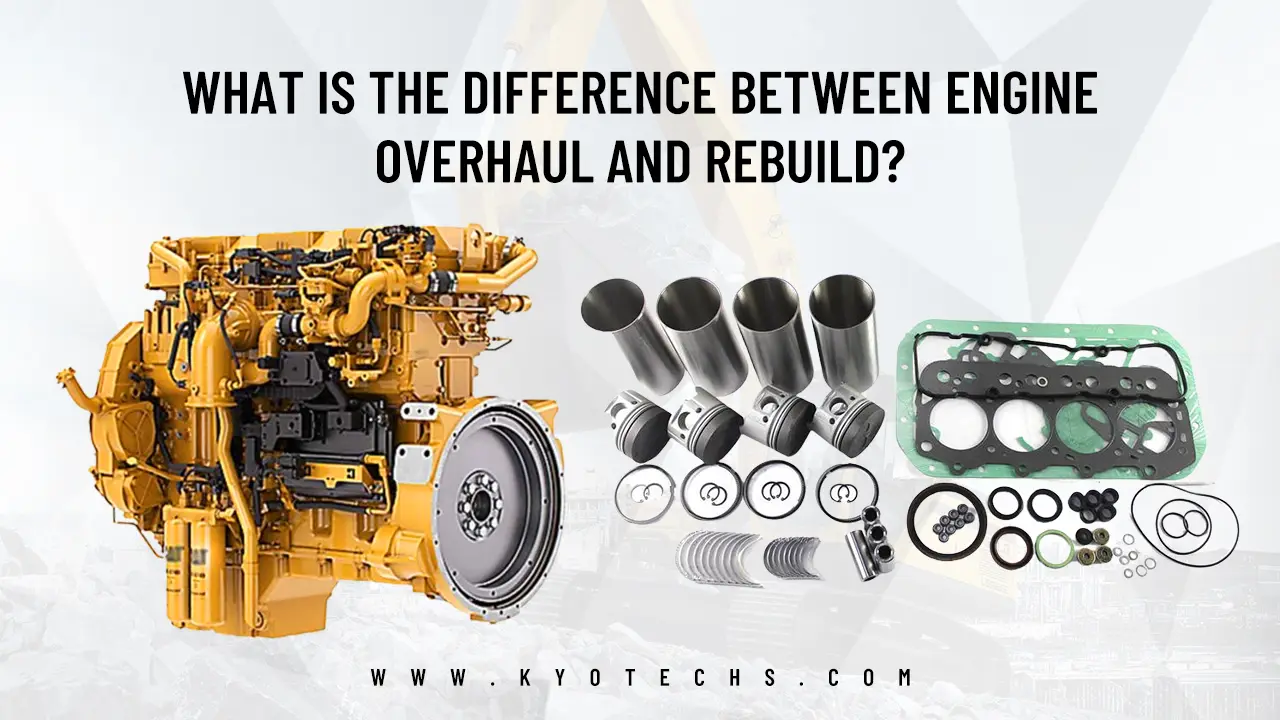
What is the difference between engine overhaul and rebuild? Kyotechs explains: Overhaul restores worn parts for better performance, while rebuild replaces them entirely for near-new condition. Discover which suits your vehicle at Kyotechs.
When it comes to maintaining heavy machinery like excavators, understanding the difference between an engine overhaul and a rebuild is crucial for making informed decisions about repairs, costs, and equipment longevity. These two terms are often used interchangeably, but they represent distinct processes with different scopes, costs, and outcomes. Let’s explore each in detail to help you determine which option is best for your excavator’s needs.
What Is An Engine Overhaul?
An engine overhaul, sometimes referred to as a “top-end overhaul,” is a comprehensive maintenance process that involves disassembling, inspecting, cleaning, and replacing worn or damaged components within the existing engine block. The goal is to restore the engine’s performance without replacing the entire core structure.
During an overhaul, mechanics typically focus on specific components such as:
- Pistons, rings, and cylinders
- Valves, valve springs, and lifters
- Gaskets and seals
- Timing chains or belts
- Bearings and bushings
The process begins with a thorough inspection to identify worn parts. Only the components that fail inspection are replaced, while reusable parts are cleaned, machined, or reconditioned to meet manufacturer specifications. The engine block itself is usually not replaced unless it’s found to be irreparably damaged.
An overhaul is generally performed when the engine shows signs of reduced performance, increased oil consumption, or minor mechanical issues but is still fundamentally sound.
What Is An Engine Rebuild?
An engine rebuild is a more extensive process that involves completely disassembling the engine and replacing nearly all critical components, often including the engine block itself. This process essentially creates a “like-new” engine using either new or remanufactured parts.
In a rebuild, mechanics typically:
- Remove and inspect every component of the engine
- Replace the engine block if necessary
- Install new or remanufactured pistons, crankshafts, and connecting rods
- Replace all bearings, gaskets, and seals
- Recondition or replace the cylinder head
- Calibrate the fuel injection system and other critical systems
A rebuild is necessary when the engine has suffered significant damage, such as a cracked block, seized components, or catastrophic failure. It’s also performed when the engine has reached the end of its service life and an overhaul would not provide sufficient performance or longevity.
Why Is Engine Maintenance Necessary?
Proper engine maintenance is essential for excavators due to their heavy workload and operating conditions. Regular maintenance and timely repairs offer several key benefits:
1.Maximizes uptime
Well-maintained engines are less likely to break down unexpectedly, reducing costly downtime on job sites.
2.Extends equipment life
Regular care can significantly prolong the service life of an excavator, protecting your investment.
3.Improves fuel efficiency
A properly functioning engine operates more efficiently, reducing fuel costs over time.
4.Enhances performance
Maintained engines deliver consistent power and performance, ensuring productivity.
5.Reduces repair costs
Addressing minor issues through maintenance prevents them from escalating into major, more expensive problems.
6.Ensures safety
Engine failures can create hazardous situations on job sites, making reliable performance a safety concern.
Given the high cost of excavators and their critical role in construction, mining, and other industries, proactive engine maintenance is a sound financial decision.
Engine Overhaul VS Rebuild, What’s The Difference?
While both processes aim to restore engine performance, several key differences distinguish an overhaul from a rebuild:
1.Scope of work
An overhaul focuses on replacing worn components while retaining the existing engine block and major assemblies. A rebuild involves complete disassembly and replacement of nearly all components, potentially including the engine block.
2.Extent of replacement
Overhauls replace only damaged or worn parts, while rebuilds typically replace most components with new or remanufactured parts.
3.Cost
Overhauls are generally less expensive than rebuilds due to the smaller scope of work and fewer parts replaced.
4.Time required
Overhauls can usually be completed in less time than rebuilds, minimizing equipment downtime.
5.Outcome
An overhaul restores the engine to acceptable performance levels, while a rebuild aims to return the engine to near-original specifications and performance.
Engine Overhaul VS Rebuild, Which Is Better Option?
The decision between an overhaul and a rebuild depends on several factors:
1.Engine condition
If the engine block is sound and damage is limited to specific components, an overhaul is likely sufficient. For extensive damage or severe wear, a rebuild is necessary.
2.Age and usage
Older engines with high hours of operation may benefit more from a rebuild, while a well-maintained engine with moderate usage might only need an overhaul.
3.Budget considerations
Overhauls are more cost-effective for addressing specific issues, while rebuilds represent a larger investment but provide longer-term reliability.
4.Equipment value
For newer or higher-value excavators, a rebuild may be more economical than purchasing a new machine. For older equipment, an overhaul might be the more practical choice.
5.Future plans
If you intend to keep the excavator for many more years, a rebuild offers better long-term value. If you plan to replace the machine soon, an overhaul may be sufficient.
In general, an overhaul is the better option for addressing specific performance issues in an otherwise healthy engine, while a rebuild is preferable for engines with extensive damage or high wear.
Engine Replacement Or Overhaul?
When faced with major engine issues, another option to consider is complete engine replacement. This involves removing the entire faulty engine and installing a new or remanufactured one.
Engine replacement may be preferable when:
- The existing engine has suffered catastrophic damage that makes a rebuild impractical
- The cost of a rebuild approaches or exceeds the cost of a replacement engine
- The excavator is relatively new, and a replacement engine will provide better long-term value
- Downtime must be minimized (replacement can sometimes be faster than an extensive rebuild)
However, replacement is typically more expensive than either an overhaul or rebuild. It’s important to compare the total costs, including parts, labor, and downtime, for each option.
Is An Overhauled Engine Good?
A properly performed overhaul can restore an engine to reliable working condition, making it a good investment in many cases. A quality overhaul addresses specific issues, replaces worn components, and returns the engine to acceptable performance levels.
An overhauled engine can provide several additional years of reliable service, especially if combined with improved maintenance practices. However, it’s important to note that an overhaul doesn’t address all potential issues, and some components will remain in their existing condition, which may affect long-term durability compared to a rebuild.
The key to a successful overhaul is working with experienced mechanics who use quality parts and follow manufacturer specifications.
Is It Okay To Buy A Rebuilt Engine?
Purchasing a rebuilt engine can be an excellent option, provided it’s been properly rebuilt by a reputable professional or facility. A quality rebuilt engine should meet or exceed original manufacturer specifications and often comes with a warranty.
Benefits of a rebuilt engine include:
- Like-new performance at a fraction of the cost of a new engine
- Updated components that may improve reliability over the original design
- Comprehensive testing to ensure proper function
- Extended service life compared to an overhauled engine
When considering a rebuilt engine, look for certifications, warranty information, and evidence of proper testing. A well-done rebuild can provide many years of reliable service, making it a sound investment for your excavator.
Conclusion
Understanding the differences between an engine overhaul and a rebuild is essential for making informed decisions about excavator maintenance. An overhaul addresses specific worn components while retaining the core engine, offering a cost-effective solution for addressing performance issues. A rebuild is a more extensive process that essentially creates a like-new engine, ideal for severe damage or end-of-life situations.
The choice between these options depends on factors like engine condition, age, budget, and future equipment plans. In some cases, complete engine replacement may be the most practical solution.
Whichever option you choose, working with experienced professionals using quality parts is crucial for ensuring the best possible outcome. Proper maintenance and timely repairs will maximize your excavator’s performance, extend its service life, and protect your investment for years to come.