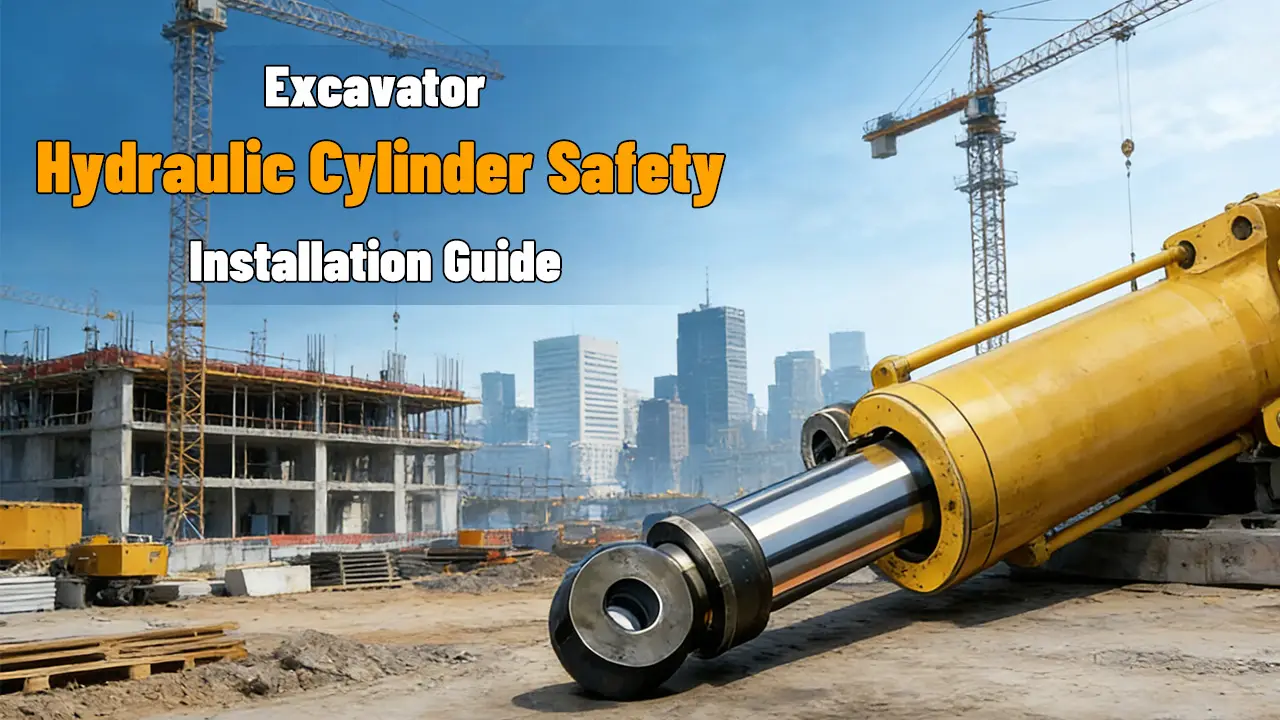
Excavator Hydraulic Cylinder Safety Installation Guide

Excavator Hydraulic Cylinder Safety Installation Guide

Hydraulic cylinders are the โ€œmuscleโ€ of any excavator. Correct, safe installation directly determines machine performance, service life, and onโ€‘site safety.

Improperly installed hydraulic cylinders lead to oil leaks, seal failure, rod scoring, unstable movement, and sudden breakdowns. These issues cause:

  • Higher maintenance costs and unplanned downtime
  • Premature component replacement
  • Safety risks for operators and bystanders
  • Reduced lifting force and precision

Complete these checks before touching any component:

  1. Verify cylinder model, bore, stroke, and pressure rating match the excavator.
  2. Inspect the cylinder body, rod, and mounts for dents, scratches, bending, or corrosion.
  3. Check seals, wipers, and Oโ€‘rings for cracks, hardening, or damage.
  4. Clean mounting brackets, pin bores, and hydraulic ports to remove dirt, rust, and burrs.
  5. Prepare correct pins, shims, bolts, and torque tools.
  6. Cap all ports to prevent dust and moisture from entering the hydraulic system.
  7. Confirm the work area is clean, level, and wellโ€‘lit.

Alignment is the most critical factor for cylinder longevity.

  • Parallelism & concentricity: The cylinder rod must move in a straight line with the load. Misalignment creates side loads.
  • Side load damage: Bends the rod, damages seals, and causes premature failure.
  • Wear reduction: Proper alignment evenly distributes stress, extending seal and component life.
  • Smooth operation: Eliminates sticking, jerking, and noise during extension and retraction.
  • Always use alignment tools and test movement before full assembly.

1.Machine preparation

Park the excavator on level ground, lower the boom fully, shut off the engine, and remove the key. Relieve all residual hydraulic pressure.

2.Mounting the cylinder

Use proper lifting gear to position the cylinder. Align pin eyes with brackets. Insert pins and install retainers.

3.Torque fasteners

Tighten bolts and nuts to manufacturerโ€‘specified torque. Avoid overโ€‘tightening.

4.Connect hydraulic lines

Clean ports and fittings. Attach hoses/tubes without twisting. Ensure proper routing to avoid pinching.

5.Bleed air from the system

Run the cylinder slowly through full stroke to release trapped air. Check for leaks.

After installation:

  1. Check hydraulic oil level and quality. Top up or replace if needed.
  2. Cycle the cylinder several times without load to purge air.
  3. Inspect all joints and seals for leaks.
  4. Test under light load, then full load. Check for smooth movement, noise, or drift.
  5. Confirm holding pressure and no abnormal drop.
  6. Reโ€‘torque fasteners after a short test period.
  • Relieve system pressure completely before disconnection or installation.
  • Wear PPE: safety glasses, oilโ€‘resistant gloves, steelโ€‘toed boots, helmet.
  • Never place hands or body near moving parts or under suspended components.
  • Use approved lifting equipment for heavy cylinders.
  • Do not modify cylinders, mounts, or pins.
  • Keep flames and sparks away from hydraulic oil.
  • Follow lockoutโ€“tagout (LOTO) procedures.
  • Skipping pressure relief
  • Using incorrect or worn pins and shims
  • Dirty ports causing system contamination
  • Misalignment leading to side loads
  • Overโ€‘tightening or uneven torque
  • Forgetting to bleed air
  • Routing hoses incorrectly (twisted, pinched, chafed)
  • Ignoring preโ€‘use testing

Excavator hydraulic cylinder installation is not just assemblyโ€”it is a safety and reliability process. Careful preparation, precise alignment, stepโ€‘byโ€‘step execution, and thorough testing ensure safe operation, long component life, and minimal downtime.
If you are interested in this or would like to learn more about our products, please feel free to contact us.

Q1. How do you install a hydraulic cylinder safely?

Make sure that it is properly aligned, mounted and connected to the hose and must be done in accordance to manufacturer specifications and even depressurization of the system.

Q2. What tools are required for hydraulic cylinder installation?

Common tools are spanners, torque wrench, alignment tools, lifting equipment and thread sealant of fittings.

Q3. What safety precautions should be followed during installation?

Always relieve hydraulic pressure, use PPE, ensure that loads are supported, and ensure that there are no leaks prior to system start up.

Q4. What is the time taken to install a hydraulic cylinder?

The installation process usually requires 1-4 hours, based on the design of the machine, its accessibility and complexity of the system.

Q5. What are common mistakes during hydraulic cylinder installation?

Leaks and contamination, inadequate alignment, excessive tight fittings, improper mounting, and not checking of leaks and contamination are among the common mistakes.